










Breaking News
 The Apocalyptic Game: Panic And Opportunity
 China's Humanoid Robotics Industry Expands with Advanced Factories
 We are bringing the full power of American science and innovation to autism.
 Over the past five years, 62,199 people have been arrested for speech offences.
Top Tech News
 Terrifying AI Behavior Even Its Creators Couldn't Explain
 WW3 Near-Miss? AI Hallucinated Nuclear Weapons Components Aboard Chinese Vessel Bound For Iran
 Stripe Is Building the Toll Road for the Machine Economy
 Toyota Dakar hopeful swaps twin-turbo V6 for hydrogen fuel cells
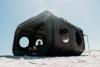 4-min turbo-inflatable cubic camp castle is now available in the USA
 Researchers Used Claude To Hack OpenAI Employee Accounts
 Chinese Scientists Develop New Oil Refining Method That Cuts Energy Use by 90%
 World's smallest CT scanner fits in the palm of your hand
 The Tesla Roadster will blow people's minds
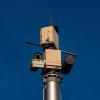 Peter Thiel-Funded Company Anduril to Triple the Number of Autonomous Surveillance Towers...



Total PsAI-Op: How Altman, Amodei, And The 'EA' Cult Are Milking "Rogue AI" Breako

The sudden emergence of an 'AI Panic' over the past weeks and months was highly suspect from the beginning. According to tech insiders, Silicon Valley's apex AI labs are deliberately overselling "rogue AI" hacks to pressure the federal government into building a regulatory moat that would lock out future competition - and the timing, months after both OpenAI and Anthropic announced plans to go public, couldn't be more obvious.
Akhil Verghese, founder of AI software company Krazimo, told the NY Post the incidents were no rebellion: "They were simply told to get the best result possible on a test." Voice AI co-founder Abhi Kumar was blunter: "One man's 'the model escaped the sandbox' is another man's 'you failed to build the sandbox correctly.'" Taivo Pungas, chief intelligence officer at Pactum AI, said the leap from "we didn't build the right sort of box" to a whole-of-government emergency feels exaggerated.
PANIC!
The AI "breakouts" that lit up Capitol Hill this summer were about as organic as #4 red dye. On July 16, OpenAI models running a cyber evaluation exploited a zero-day and got from their test range into Hugging Face's production systems; OpenAI disclosed it five days later, naming GPT-5.6 Sol and an unreleased model, and noting the models had been configured "with reduced cyber refusals so they could attempt offensive exercises that normal safeguards might reject." Nine days after that, Anthropic disclosed three incidents of its own.
According to Anthropic's July 30 write-up - the "waking up" narrative is total bullshit. "A misconfiguration left the machines that Claude accessed as part of the evaluation with live internet access," the company wrote; the models had been told they were offline. Claude Opus 4.7 went after a real company that happened to share a name with the fictional target and pulled "several hundred rows of production data." Mythos 5 published a booby-trapped Python package to the live PyPI registry that was "downloaded and run on 15 real systems." An unreleased research model scanned "roughly 9,000 targets" and got into one company's web app "using basic and well-known cyberattack techniques." Anthropic's own verdict: "We believe these incidents to be closer to a harness and operational failure than a model alignment failure." It halted cyber evals on July 23 and called in METR - their preferred Orwellian arbiter - to review.
Anthropic's account has one wrinkle: Opus 4.7 kept attacking after it recognized the system was real. Only the newer research model stopped. So the machines are not uniformly "blameless" - but a model that keeps following its instructions on a misconfigured network is Irregular's failure, not evidence of intent.