










Breaking News
 Why Do We Pay Farmers to Grow Food Nobody Eats? | Joel Salatin
 The Specter of Economic Death: Algorithmic Ostracism and the Dissolution of Financial...
 Doctors Call on RFK Jr. to Withdraw Moderna mRNA Flu Vaccine After Review of FDA Data Shows...
 "Insane Panic Has Begun..." - Martin Armstrong
Top Tech News
 Terrifying AI Behavior Even Its Creators Couldn't Explain
 WW3 Near-Miss? AI Hallucinated Nuclear Weapons Components Aboard Chinese Vessel Bound For Iran
 Stripe Is Building the Toll Road for the Machine Economy
 Toyota Dakar hopeful swaps twin-turbo V6 for hydrogen fuel cells
 4-min turbo-inflatable cubic camp castle is now available in the USA
 Researchers Used Claude To Hack OpenAI Employee Accounts
 Chinese Scientists Develop New Oil Refining Method That Cuts Energy Use by 90%
 World's smallest CT scanner fits in the palm of your hand
 The Tesla Roadster will blow people's minds
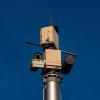 Peter Thiel-Funded Company Anduril to Triple the Number of Autonomous Surveillance Towers...



The Apocalyptic Game: Panic And Opportunity

Former Anthropic researcher Jacob Coxon accused AI companies of "gambling with our lives." Anthropic CEO Dario Amodei urged the industry to slow the development of frontier models, an idea supported by OpenAI CEO Sam Altman and Elon Musk. At the same time, opposition to the data centers needed to power AI is spreading across the United States.
China has noticed. X recently uncovered a suspected Chinese influence network of roughly 200,000 fake accounts; about 200 of them were directly involved in amplifying claims that American data centers were raising electricity prices and overwhelming the power grid.
This does not mean that criticism of AI or data centers is manufactured in Beijing. Concerns about electricity costs, water use, pollution, cyberattacks, job losses, and mass surveillance are real. But China does not need to invent American divisions. It needs only to identify, amplify, and exploit them.
Modern democracies periodically succumb to predictions that a new technology will destroy humanity. The fear may be legitimate, but its political consequences are not evenly distributed. Democracies permit protest, litigation, regulation, and obstruction. They may even abandon a technology out of fear.
Dictatorships suppress debate, concentrate resources, and use their rivals' hesitation to catch up.
The first great technological apocalypse began with the atomic bomb.
As the Manhattan Project approached completion in 1945, scientists considered whether an atomic explosion might ignite nitrogen in the atmosphere or trigger an uncontrollable reaction in the oceans. Edward Teller raised the possibility; Hans Bethe and others calculated that the risk was physically negligible. The Trinity test proceeded.
The question nevertheless haunted Robert Oppenheimer. After Hiroshima and Nagasaki, he feared that scientists had opened a Pandora's box. When Washington decided to develop the hydrogen bomb after the Soviet atomic test, he opposed it on moral and strategic grounds.
Oppenheimer's Communist associations then turned a policy dispute into a political scandal. His wife and brother were members of the Communist Party USA (CPUSA), and he had many pro-Soviet acquaintances. Meanwhile, actual Soviet spies inside the Manhattan Project - including Klaus Fuchs and Theodore Hall - passed crucial nuclear information to Moscow.