










Breaking News
 The Apocalyptic Game: Panic And Opportunity
 China's Humanoid Robotics Industry Expands with Advanced Factories
 We are bringing the full power of American science and innovation to autism.
 Over the past five years, 62,199 people have been arrested for speech offences.
Top Tech News
 Terrifying AI Behavior Even Its Creators Couldn't Explain
 WW3 Near-Miss? AI Hallucinated Nuclear Weapons Components Aboard Chinese Vessel Bound For Iran
 Stripe Is Building the Toll Road for the Machine Economy
 Toyota Dakar hopeful swaps twin-turbo V6 for hydrogen fuel cells
 4-min turbo-inflatable cubic camp castle is now available in the USA
 Researchers Used Claude To Hack OpenAI Employee Accounts
 Chinese Scientists Develop New Oil Refining Method That Cuts Energy Use by 90%
 World's smallest CT scanner fits in the palm of your hand
 The Tesla Roadster will blow people's minds
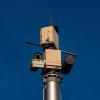 Peter Thiel-Funded Company Anduril to Triple the Number of Autonomous Surveillance Towers...



Good Intentions Paved The Road To The 2008 Financial Crisis
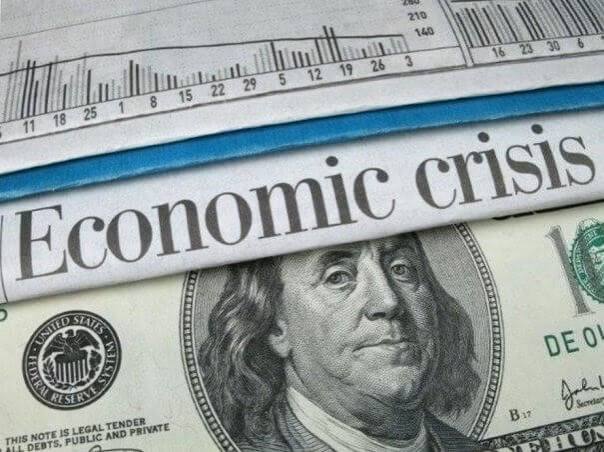
Lehman's failure and the GFC more broadly were dramatic economic events. Lehman Brothers was the largest bankruptcy in US history to date. The global financial crisis gave rise to the Great Recession. The stock market fell by more than 50 percent, the economy contracted by 4.3 percent, unemployment rose from 4.7 percent to 10 percent, and the subsequent decade of US economic growth was abnormally anemic.
Many myths about Lehman's failure and about the 2008 global financial crisis continue to dominate public discourse. Popular consensus still places the blame primarily on deregulation, Wall Street greed, and reckless financial engineering. And many anecdotes inform their perspective.
Mortgage fraud was common and egregious, especially in the final few years of the housing frenzy (2004-2007). No-doc loans, NINJA loans, and liar loans were far too common - and most people were not held accountable for their complicity. Accusations of fraud by large banks and credit rating agencies, though, were largely overstated. Other than a couple big mortgage lenders engaged in systemic fraud (Countrywide) or truly reckless lending (Golden West), most financial institutions operated on the right side of the law.
The real driver of the GFC was pervasive bad incentives created by years of misregulation. Consider, for example, the Federal Reserve's Recourse Rule. This regulated how much capital banks had to hold against different classes of assets, and strongly favored mortgage-backed securities (MBS). Not surprisingly, banks shifted their portfolios to hold more MBS - one of the major asset classes to blow up in 2008. Regulation created this herd-like behavior, leading to overconcentration in a certain asset and greater systemic fragility.
Simultaneously, more than a decade of regulatory pressure forced Fannie Mae and Freddie Mac to lower their underwriting standards - a shift that soon infected the entire industry. The Community Reinvestment Act, federal agencies, and the Department of Housing and Urban Development all pushed for reduced mortgage underwriting standards. More people were able to buy a home - even if they couldn't afford it.
Peter Wallison and Edward Pinto document this regulatory transformation. Far from a market-driven "race to the bottom" by private lenders chasing short-term profit, housing regulators in the early 1990s viewed traditional underwriting standards as discriminatory barriers to homeownership. Using the 1992 Housing and Community Development Act, the Department of Housing and Urban Development mandated affordable-housing quotas for Fannie Mae and Freddie Mac - requiring them to allocate an ever-increasing share of their support to low- and moderate-income borrowers, starting at 30 percent in 1992 and climbing to 56 percent by 2008.