










Breaking News
 Your Opportunity to Weigh In on Federal Vaccine Policy - Deadline Sunday Sept 20
 Palantir $PLTR CEO Alex Karp says "AI companies have to be nationalized"
 It's infuriating that they know better, but sell us out until they leave
 The Economic Truth: Fiat Currency, AI & Economic Collapse - Live with John Sneisen
Top Tech News
 World's smallest CT scanner fits in the palm of your hand
 The Tesla Roadster will blow people's minds
 Peter Thiel-Funded Company Anduril to Triple the Number of Autonomous Surveillance Towers...
 Quantum computing may soon become part of the microscope itself.
 Volkswagen Just Unveiled The Most Efficient EV Ever Tested
 NASA Super Light Solar Sail Project Will Be 12-40 Times Lighter and Faster
 Space Telescope Interferometer to Image Exoplanet Continents
 Twenty-five years of "temporary": how 9/11 built a surveillance state Americans never vote
 I'll Never Buy Another WALMART Battery!
 Shoei GT-Air 3 Smart helmet drops with built-in AR for $1,500



The Meat We Eat: How We Choose It, Buy It & Cook It
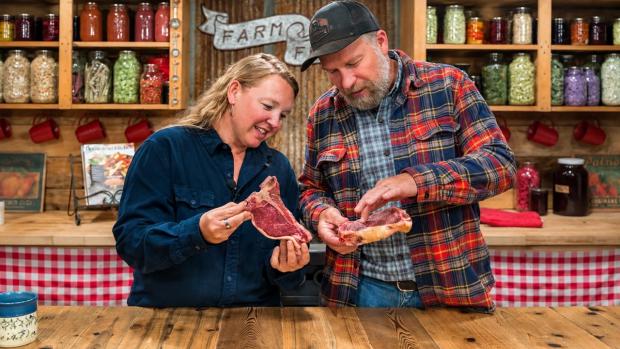
If you're trying to feed your family better-quality meat, it can be hard to know what all the labels really mean. Grass-fed, grass-finished, pasture-raised, organic... and once you bring that meat home, does it need to be cooked differently?
In this episode, Josh and I are talking about the meat we eat here on our homestead and why the way an animal is raised and fed matters so much to us.
We'll explain the difference between grass-fed and grass-finished beef, what pasture-raised really means for chickens and pigs, and how you can start sourcing better meat without feeling like you have to make the jump to "perfect" overnight.
Then we're taking the conversation into the kitchen. I'll share a simple way to think about different cuts of meat so you know whether to cook them hot and fast or low and slow. Once you understand whether you're working with a tender or hardworking cut, cooking meat becomes much less complicated.
We also talk about buying meat directly from local farmers, purchasing beef or pork in bulk, and why pasture-raised meat can have more variation in flavor and texture than what you may be used to from the grocery store.
The goal isn't perfection. It's simply to take the next step toward better food for your family.
Time Stamps:
0:00 - Introduction & Chit Chat
5:30 - Grand Teton Ancient Grains
9:14 - Main Topic