










Breaking News
 'Revolution' - Dr. Ron Paul
 'Non-intervention' - Daniel McAdams
 AI Emergency: The AI Labs Are Lying To Everyone, He Says 99% Chance Of Extinction...
 A Special Message from Tucker Carlson
Top Tech News
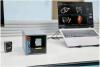 World's smallest CT scanner fits in the palm of your hand
 The Tesla Roadster will blow people's minds
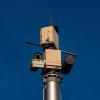 Peter Thiel-Funded Company Anduril to Triple the Number of Autonomous Surveillance Towers...
 Quantum computing may soon become part of the microscope itself.
 Volkswagen Just Unveiled The Most Efficient EV Ever Tested
 NASA Super Light Solar Sail Project Will Be 12-40 Times Lighter and Faster
 Space Telescope Interferometer to Image Exoplanet Continents
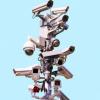 Twenty-five years of "temporary": how 9/11 built a surveillance state Americans never vote
 I'll Never Buy Another WALMART Battery!
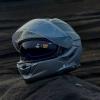 Shoei GT-Air 3 Smart helmet drops with built-in AR for $1,500



Hackers rip down Flock camera, steal its data, share findings with media
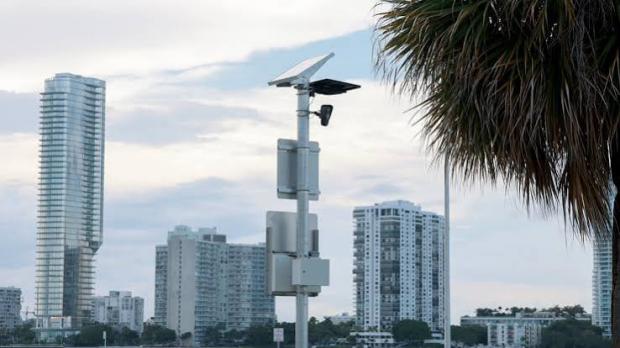
The group, called stegan0gram, shared findings with Wired and 404 Media, who ran a joint investigation. The outlets found that in a 21-day period the camera photographed roughly 50,200 vehicles and generated about 1.6 million images.
Flock has a system of license plate readers, video cameras and audio detection devices incorporated into its AI database. That database logs license plate numbers, as well as car features like make, model, color and bumper stickers. Local jurisdictions can share data with other law enforcement agencies, creating a major network that law enforcement can use in crime solving.
The outlets stated that the camera generally captures around 28 images from a single encounter with a vehicle, though some can produce more than 100, and sends photos and other data to Flock through a cellular network. They noted that the camera does not identify vehicles or read plates, stating that this analysis appears to happen on Flock's servers.
In one instance, the camera — which runs about 20 Flock-built apps including apps that detect motion and upload data — was able to detect an American flag patch located on a motorcyclist's saddle bag, per 404 Media and Wired.
One hacker affiliated with stegan0gram told the outlets, "We liberated hardware in the field, disarmed them, and proceeded with reverse engineering of the cameras and associated solar equipment."
"Why just destroy them when we can reverse engineer them and find the secrets of those spying on us?" they added.
When asked about the investigation, a spokesperson from Flock told The Hill, "The unauthorized removal and tampering of a Flock camera is illegal."
"Flock takes security seriously and maintains a public Vulnerability Disclosure Policy for security researchers to report potential vulnerabilities directly to us," the spokesperson said. "We received no report through that process, and based on the limited information provided, we do not have enough detail to assess the claims being made."
The surveillance technology has become controversial among lawmakers, with Florida Gov. Ron DeSantis (R) saying earlier this month that he worried the Sunshine State would become a "digital AI surveillance state where everything we're doing is being tracked at all times."
Rep Thomas Massie (R-Ky.) also unveiled a bill this month that aims at restricting the use of federal funds for automated license plate reader cameras and biometric surveillance cameras. It is called the Flock-Off Act.