










Breaking News
 Authoritarian E.U. Kids Act to Demand Mandatory Gamer Age Checks
 When War Comes Home: A Constitutional Warning
 US Bombs Somalia For 81st Time This Year
 Zelensky Slaps His Former Press Secretary With Sanctions After Tucker Carlson Interview
Top Tech News
 Quantum computing may soon become part of the microscope itself.
 Volkswagen Just Unveiled The Most Efficient EV Ever Tested
 NASA Super Light Solar Sail Project Will Be 12-40 Times Lighter and Faster
 Space Telescope Interferometer to Image Exoplanet Continents
 Twenty-five years of "temporary": how 9/11 built a surveillance state Americans never vote
 I'll Never Buy Another WALMART Battery!
 Shoei GT-Air 3 Smart helmet drops with built-in AR for $1,500
 AI Whistleblower Tells Tucker How AI Could Kill All Humans by 2040
 You Hate Flock? Well There's More...
 Will Spiking Diesel Prices Drive Autonomous Trucking?



Saudis Cancel September Crude Cargoes To Europe As East-West Pipeline Shutdown Deepens...
Saudis Cancel September-Loading Crude Cargoes to Europe
"Refining is super short. Between Europe's woes, Russias war on Ukraine and a drop in refined products from the Arabian Gulf its really bad. As many of my amazing followers showed yesterday… Europeans are paying between $9-$11 per gallon for diesel," CNBC's Brian Sullivan wrote on X.
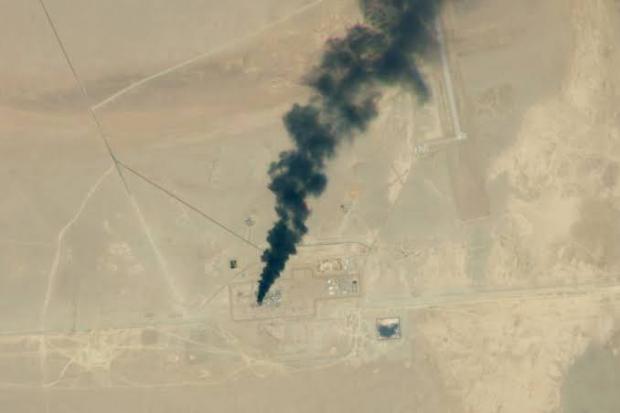
Europe's energy supply outlook is deteriorating after Reuters reported Tuesday that Saudi Arabia had notified some European refiners that their September-loading crude cargoes would be canceled following the shutdown of its critical East-West pipeline after a drone attack.
Beyond a diesel shortage in the West, Europeans are also dealing with low natural gas stockpiles heading into the Northern Hemisphere winter, with prices reaching their highest level since December 2022.
Saudi Oil Routes Narrow: Kingdom Eyes Hormuz Export Surge After Pipeline Attack
Middle East tensions remain high, with Brent crude futures trading around $105 a barrel and US diesel crack spreads near $110 a barrel amid an ongoing global refining crisis. Disruptions to Russian fuel production from the war in Ukraine are compounding supply constraints across the Middle East.
Saudi Arabia's options for maintaining exports have significantly narrowed following a drone attack that shut down its critical East-West pipeline last week. With that alternative pipeline route disrupted, possibly for up to a month, and shipping risks elevated around the Arabian Peninsula, Riyadh is seeking to move more crude through the highly contested Strait of Hormuz.
US Energy Secretary Chris Wright told reporters Monday that the US Navy is escorting a large number of vessels through the Oman shipping corridor in the Hormuz chokepoint. Those escorts could support increased Saudi shipments and bolster Riyadh's confidence in US naval protection.
Bloomberg reported that Riyadh has already begun ramping up crude transits through Hormuz. The report cited sources, and the kingdom did not confirm it.
Saudi exports had recovered toward 4 million barrels a day in early September, with about 1 million moving through Hormuz and the balance through Yanbu on the Red Sea. That leaves the kingdom facing a substantial export shortfall.
Riyadh has two options right now:
Restore East-West pipeline pumping infrastructure in a timely manner; or
Sharply increase Gulf shipments (with US naval protection).
Geospatial intelligence shows high-resolution satellite imagery of the aftermath of the drone attack that destroyed pumping infrastructure.