










Breaking News
 InfiMaker K1: The Pro-Grade Desktop 5-Axis CNC
 Why is candy getting SO EXPENSIVE? The surprising reasons your M&Ms and Snickers cost so much...
 Richard Branson's wife Joan could have been saved if doctors had prescribed her medication...
 Trump makes extraordinary promise to give EVERY American adult $5,000 'dividend'...
Top Tech News
 Chinese Concept Video Imagines the Future of Warfare
 OPTIMUS CONFIRMED: 15,000 Bots This Year -- Tesla to $3,000
 What is Going On With Robotaxi and Cybercab? Here Are All the Answers
 Floating data center would provide water and electricity to 32,000 homes
 OpenAI Cuts Off Elon's Cursor, Humanity's First Star Probe, and Trump's Nuclear Mars Shi
 Eating pollution? Plastic-to-cookie technology raises safety, environmental concerns
 Ford's $30,000 Fathom EV Truck Appears More Conventional Than Expected
 Berlin-based artist Simon Weckert explored that idea with Digital Camouflage...
 Tether expands tokenization business into Saudi Arabia, starting with real estate
 Ukraine is facing a new problem in its war with Russia:


Why is candy getting SO EXPENSIVE? The surprising reasons your M&Ms and Snickers cost so much...
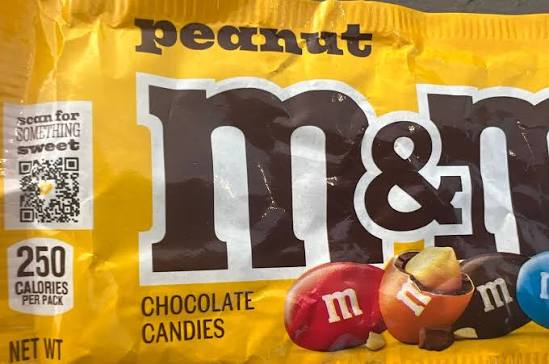
There was a time when grabbing a candy bar at the checkout was the very definition of a cheap treat.
Now, that same impulse purchase can feel surprisingly expensive – and the package may contain less candy than it used to.
From chocolate bars to bags of Halloween candy, America's shoppers have been noticing that their favorite sweets are costing more, while some products appear to be getting smaller.
And it turns out there is a lot more behind the price hikes than companies simply deciding to charge more.
New research from the US Bureau of Labor Statistics (BLS) breaks down exactly what has been happening to candy prices – and found that the cost of some of the ingredients used to make confectionery has exploded.
Between December 2019 and November 2024, the consumer price index for candy and chewing gum jumped 32 percent.
Over the same period, the producer price index for confectionery materials – including ingredients such as cocoa products and corn sweeteners – soared 87.6 percent.
The import price index for sugar and confectionery manufacturing also climbed 73.3 percent.
So what is making candy so expensive? One of the biggest culprits is cocoa.
The BLS found that around 65 percent of ingredient costs for the US confectionery industry come from just three inputs: cocoa beans, sugar and corn syrup.
Cocoa alone accounts for around 28.4 percent, while corn syrup makes up 28.1 percent and sugar 8.7 percent.
And cocoa supplies have been under enormous pressure. Global cocoa production fell more than 13 percent in the 2023-24 season, dropping from around 5.04 million metric tons to 4.37 million metric tons. At the same time, demand remained relatively strong.
The biggest problem has been concentrated in West Africa, where Cote d'Ivoire and Ghana typically produce between 50 and 60 percent of the world's cocoa.
Both countries have experienced difficult weather conditions. Hotter and drier weather reduced soil moisture and affected bean sizes, while heavy rainfall subsequently contributed to diseases including cacao swollen shoot virus and black pod disease.
The rain also caused delays getting cocoa to ports. Ghana's 2023-24 crop eventually reached a 23-year low. The result was a nasty supply squeeze just as chocolate manufacturers were desperately trying to secure enough beans.
And the price of cocoa went through the roof. Cocoa futures, which had generally traded between $1,000 and $3,500 per metric ton from 2000 through the third quarter of 2022, climbed sharply from late 2022.
They briefly passed $11,000 per metric ton in April 2024, before reaching a record $12,565 per metric ton in December 2024, according to the BLS.