










Breaking News
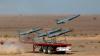 Iran Says It Launched Attacks on US Bases in Kuwait, UAE
 Israel's Ben Gvir Unveils Plan To Remove All Palestinians From Gaza
 A Nation of Technoserfs
 Celebrate! UN admits UN climate pacts worthless!
Top Tech News
 Floating data center would provide water and electricity to 32,000 homes
 OpenAI Cuts Off Elon's Cursor, Humanity's First Star Probe, and Trump's Nuclear Mars Shi
 Eating pollution? Plastic-to-cookie technology raises safety, environmental concerns
 Ford's $30,000 Fathom EV Truck Appears More Conventional Than Expected
 Berlin-based artist Simon Weckert explored that idea with Digital Camouflage...
 Tether expands tokenization business into Saudi Arabia, starting with real estate
 Ukraine is facing a new problem in its war with Russia:
 It charges more than it discharges while driving
 Dataminr AI tech to go live on NATO Maven system: CEO
  The Most Dangerous Interview Ever Recorded? PART 2


Ukraine is facing a new problem in its war with Russia:

This makes the terminology increasingly important. In terms of their characteristics, jet-powered "Shaheds" are already closer to cruise missiles than conventional UAVs. The question is what to call them: "light cruise missiles," "mobilization cruise missiles," or something else.
But the threat remains the same.
Russia's "Geran-5," for example, reportedly has a launch weight of around 800 kg, a warhead of up to 90 kg, a range of up to 900 km and a speed of around 600 km/h.
If a weapon has a threat level comparable to a cruise missile, it is also correspondingly harder to intercept.
What Kyiv has faced over the past several days can therefore be viewed as a massive and prolonged barrage involving a new class of jet-powered strike weapons, currently referred to as "jet-powered Shaheds."
If the figures of 1,500 jet-powered UAVs launched last month and 2,500 this month are accurate, the scale is already comparable to historical campaigns involving mass use of relatively cheap cruise weapons.
During World War II, Germany launched approximately 8,000 V-1 flying bombs against Britain over roughly nine months.
But this is not a "one-way street."
According to Janes, as of June 2026, Ukraine had already conducted around 7,000 launches of jet-powered UAVs/cruise missiles of the Bars family in various configurations.
Ukraine is not simply trying to survive a new class of Russian weapons. We are also developing our own ability to respond with similar systems.
But that requires more than simply "reconfiguring" the civilian sector.
If jet engines are needed by the thousands, someone has to manufacture them — along with airframes, electronics, navigation systems, warheads, fuel and dozens of other components.
The next stage of this war is therefore not just about technology.
It is about resources and economic priorities.
To withstand Russian attacks while expanding our own strike capabilities, Ukraine will have to direct an increasing share of its resources toward defense production.
Because thousands of jet engines are not going to manufacture themselves.