










Breaking News
 The world is forgetting how to fear nuclear war
 Man Found Dead at Burning Man as Rain Turns Music Festival Into Muddy Hellhole
 Excavation Work On Trump's Arch To Begin Over Next 2 Weeks, Burgum Says
 Online Betting Adoption Goes Parabolic: First-Timers Triple, Gen Z Overtakes Millennials...
Top Tech News
 Floating data center would provide water and electricity to 32,000 homes
 OpenAI Cuts Off Elon's Cursor, Humanity's First Star Probe, and Trump's Nuclear Mars Shi
 Eating pollution? Plastic-to-cookie technology raises safety, environmental concerns
 Ford's $30,000 Fathom EV Truck Appears More Conventional Than Expected
 Berlin-based artist Simon Weckert explored that idea with Digital Camouflage...
 Tether expands tokenization business into Saudi Arabia, starting with real estate
 Ukraine is facing a new problem in its war with Russia:
 It charges more than it discharges while driving
 Dataminr AI tech to go live on NATO Maven system: CEO
  The Most Dangerous Interview Ever Recorded? PART 2


The world is forgetting how to fear nuclear war
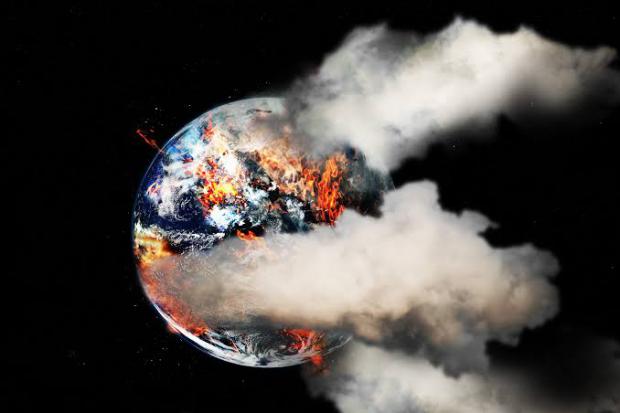
For decades, mutual deterrence among major powers provided the world with a degree of predictability, with the nuclear factor lying at the heart of this system since the middle of the last century. The great powers restrained one another and, in doing so, restrained themselves.
They understood that overly ambitious geopolitical adventures could carry unacceptable risks, thus "strategic stability" was the reassuring term given to what was, in reality, the capacity for mutual destruction. International institutions grew around this balance like mushrooms around a tree trunk, but beneath all the agreements and diplomatic language lay something much simpler: the fear of the consequences of a direct conflict between major powers. Now, however, that system is falling apart.
Many posit that the problem is precisely the loss of fear as political elites have ceased to believe that nuclear war is genuinely possible and hence the declining restraint we see in the conflict in Ukraine, in the Middle East and, potentially, in Asia.
The apparent solution is therefore to remind everyone just how terrifying nuclear war would be. Restore the fear, the argument goes, and states will once again exercise restraint and become ready to negotiate new rules. There's logic to this, but there's also an enormous danger.
What happens if nuclear weapons are actually used? Either they produce precisely the catastrophe humanity has feared for eight decades, with irreparable consequences, or something quite different happens, such as there's terrible destruction, but the world does't end and the weapon doesn't even guarantee victory.
In that case, nuclear weapons could cease to be primarily a political and psychological barrier and become simply another means of warfare, albeit an extraordinarily powerful one. Would this restore fear? Or would states instead accelerate the development of nuclear weapons designed for more effective battlefield use? Well, in the present atmosphere of growing recklessness, either is conceivable.
Nuclear weapons are the most powerful weapons humanity has invented and they were created to fight wars, but we discovered that they could perform another function by preventing the largest and most destructive wars from occurring at all. Today, however, perceptions seem to be returning to their starting point that a weapon is a weapon, even when it is nuclear.
Yet expecting weapons to solve the problems between states places impossible demands on them, particularly when warfare itself is becoming increasingly asymmetrical and all-pervasive.
States are finding it harder to hold on to what they can't afford to lose. The erosion of borders, once celebrated as one of the great achievements of liberal globalization, is acquiring a much more alarming character.