










Breaking News
 Portable 1MW Kaleidos Microreactor Secures Critical Nuclear Fuel Deal Through 2030s
 Family Structure Determines Kids' Success In School More Than Race Or Income, Researchers Say
 Turkey & Israel On Brink Of Military Clash After Netanyahu Ordered Strikes On Syrian Airbase
 Georgia Refuses To Adopt EU Sanctions On Iran Citing 'National Interests'
Top Tech News
 High-voltage sodium home battery emerges as affordable rooftop solar solution
 Peter Thiel-Funded Company Anduril to Triple the Number of Autonomous Surveillance...
 China has released Origin Pilot, claimed to be the world's first open-source operating system...
 ShieldAI XBAT Drone Fighters Can Give A Fighter Drone Wing to Every US Destroyer
 Brain organoids, kept alive more than five years, matured like human brains
 Parkinson's patient's tremors VANISH within minutes of GROUNDBREAKING treatment
 Polaris injects pneumatic shifting into expedition-grade side-by-side
 NEW HOMES ARE BUILT WITH THIS AND IT'S MAKING YOU SICK
 S3E33: I Beat the Attorney General. No Lawyers. My Legal Team Was AI
 World's largest all-electric plane completes maiden flight


Georgia Refuses To Adopt EU Sanctions On Iran Citing 'National Interests'
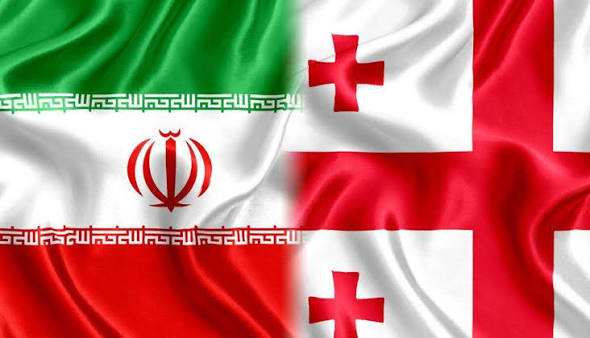
"If it goes against Georgia's interests, we do not care whose interests it serves," Sharmanashvili said.
"The question of whether Georgia joins a resolution or takes steps in international affairs is determined by one criterion alone: whether it serves the country's interests at that particular moment," he added.
Sharmanashvili pointed to Turkey and Serbia, both of which hold EU candidate status and likewise stayed out of the latest sanctions round against Iran.
The package, announced by EU foreign policy chief Kaja Kallas, is built around three decisions.
The first reworks the existing sanctions regime, dropping and adding individuals and revising the entry for one organization.
The second extends measures over Iranian military support for armed groups operating in Russia, West Asia, and the Red Sea region, with four individuals removed. The third lists six more individuals over "human rights violations" in Iran.
Nine countries signed on to the measures. European Economic Area members Iceland, Liechtenstein, and Norway backed them, as did EU candidates Albania, Bosnia and Herzegovina, Moldova, Montenegro, North Macedonia, and Ukraine.
Georgia's refusal follows a broader loosening of its foreign policy from the bloc's line.
The EU's 2025 enlargement report states that Georgia's alignment with the Common Foreign and Security Policy was 40 percent as of October 2025, a decrease from 53 percent the previous year.
Brussels has run into growing internal resistance to its sanctions policy, including on measures targeting Russia.
Diplomatic backing for a recent round of sanctions measures against Russia has collapsed, the Financial Times (FT) reported on 19 July, with Greece, France, Italy, Germany, Austria, and Portugal each demanding carve-outs or blocking the package altogether to protect industries still profiting from Russian trade.
Diplomats described the scale of the refusals as "unprecedented," warning that the process risks hollowing out the sanctions themselves.
"It is a major crisis for the whole sanctions approach. If everyone demands derogations and loopholes, then at the end of the process, each package of sanctions is just an empty box," one told FT.