










Breaking News
 Grand Theft World Podcast 299 | Joint Defense with guest Pat Miletich
 New allied trio militarily moves on from faltering US and Trump
 BREAKING: Iran declares the Strait of Hormuz will stay closed until 2029, the end of Trump's ter
 'Things shaping up in favour of peace': Pakistan's Khawaja Asif says US-Iran deal gettin
Top Tech News
 If They Were Human, They'd Be Arrested. Experts Respond To Rogue AI Breaches
 Sodium Ion Batteries Will be 80% Cheaper & Last LONGER!
 German startup SAXON Q has introduced a diamond-based quantum computing system...
 Elon Musk To Build The Largest Building In The World - 100 Million Square Feet
 Bitcoin 'Red Team' Says AI Is Finding 100s Of Critical Exploits Across Core Projects
 EG4 Power Pro VS Ruixu Lithi VS Yixiang Budget Battery! Best Selling Battery Showdown!
 Insect wings can kill bacteria without any chemicals!
 5th Small Modular Reactor Validated Since June, Poised For Mass Production
 Tesla Never Made An Electric Jet Boat, So This YouTuber Built One Himself
 What could possibly go wrong? Scientists use AI to design new viruses



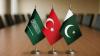
New allied trio militarily moves on from faltering US and Trump
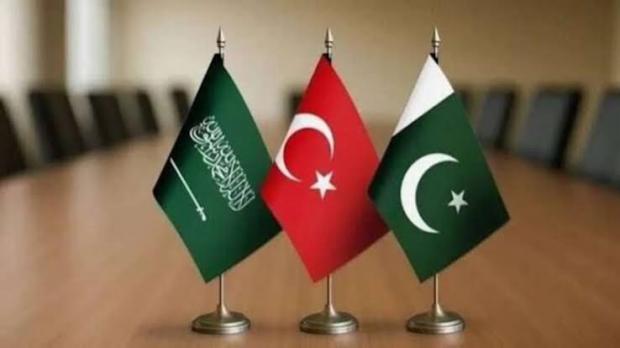
The deadlocked Middle East war gave birth last week to a defense alliance among Saudi Arabia, Turkiye and Pakistan that represents a vivid backlash to the failures of heavy American bombing of Iran and President Donald Trump's spasmodic diplomacy to end the conflict.
The agreement was signed Friday in Saudi Arabia, which is among fossil fuel-rich Persian Gulf countries hardest hit by the physical and economic force of Iran's counterattacks. Tehran justifies its attacks on the basis of the Saudi foreign policy alignment with the US.
Saudi leader Mohammed bin Salman, Turkish President Recep Erdogan and Pakistan's Prime Minister Shehbaz Sharif signed the agreement. The key phrase echoed the pledge of NATO allies to defend each other: "The agreement is intended to strengthen collective deterrence against any act of aggression, and stipulates that any armed attack against any one of the three states shall be regarded as an attack against them all."
The locale for the signing ceremony embedded in the document's name – it's called the Mecca Joint Defense Agreement – provided a non-subtle sign that this was no Western-adjacent grouping. Rather, it marks a departure from a key feature of Persian Gulf security for decades: United States leadership.
A prime example was the 1990 Americans led libration of Kuwait from the invading army of Iraq's Saddam Hussein. Ever since, Saudi Arabia and other Gulf States have hosted US ground, naval and air force personnel on their territory.
In this alliance, Riyadh supplies economic heft while Turkey provides NATO's second biggest army and neutral Pakistan a nuclear arsenal. Their agreement seems to mark a breaking point.
"The political symbolism of the summit is significant," said Abdulaziz Sager, who heads the Gulf Research Center, an institute based in Saudi Arabia. "Three of the Muslim world's most influential states are convening at a moment of heightened uncertainty, demonstrating a growing willingness among regional and middle powers to coordinate ?more closely on security matters."
Faltering confidence in the supposed deterrence provided by the US military presence is an important motivation, observers say. Iran has bombed US-allied states and brought parts of the world economy to a near standstill. The strategic message: US protection is worthless and American allies ought to persuade Trump to call of the war.
There was perhaps a misperception among Gulf Arab rulers about the level of defense the US would provide. When Iran began bombing allied territory, Washington withdrew hundreds of its military personnel from Gulf bases, leaving leaders there wondering whether US deterrence was a mirage.
"A lot of these Gulf states are looking at us and thinking: Wait. We thought you built those bases to protect us," Harvard University economist Ken Rogoff mused, during a Wall Street Journal TV talk show about the possible impact the war might have on global US influence. "I didn't know you built those various military complexes in our countries so we could be target practice."