










Breaking News
 No, The Spanish Invaders Have Not All Just 'Gone Home'
 From Influence Peddler To Starving Artist: Hunter Biden Claims Family Is Broke In Defaulting...
 'Defend Israel Or The Homeland': Top US General Issues Stark Warning To Pentagon Brass
 The Summer Slump in the Vegetable Garden (How We Survive!)
Top Tech News
 Idaho's High Desert Becomes Hot Spot For Nuclear Power Revolution
 The World's Largest Electric Aircraft Is About to Take Its First Flight
 Tesla Cybercabs and Superchargers Will Act as Mini Cell Towers for SpaceX Starlink
 Elon Vows AI-Made 'Odyssey' After Blasting Nolan's Take On Homer
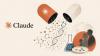 Anthropic is launching its own drug discovery programs for rare diseases using Claude...
 SpaceX AI Satellites Will Have 250 Kilowatts of Power
 Chinese researchers have developed a sodium-metal battery that can fully charge in just 4 minutes...
 SpaceX Starship Flight 13 in 3 Days - Thursday July 13
 Chinese Scientists Develop Nuclear Battery Using Carbon-14
 Teleoperated humanoid robots complete first-ever live surgery



Income Rises, Saving Falls, Gold Holds Above $4,100

Americans earned more in June yet saved less, according to the latest Personal Income and Outlays report from the Bureau of Economic Analysis. Personal income rose 0.2 percent, or $54.9 billion, while disposable personal income (DPI) increased at the same pace. Consumers did not retain the additional income for long: personal consumption expenditures (PCE) rose 0.3 percent, pulling the already low personal saving rate down to 2.7 percent. Even with a small month-to-month decline in the headline PCE price index, overall inflation remains well above the Federal Reserve's stated 2 percent goal, a backdrop that accompanied gold past $4,100 an ounce on Thursday.
A closer look at the data shows June's spending increase flowed largely into services, up $58.2 billion, while goods spending added $7.0 billion. After adjusting for inflation, real PCE increased 0.4 percent, outpacing nominal income growth and indicating that households are drawing on savings to cover daily expenses. The headline PCE price index fell 0.1 percent following a 0.5 percent increase in May, and core PCE, which excludes food and energy, rose 0.1 percent. Prices remain 3.7 percent above year-ago levels on the headline measure and 3.3 percent on the core gauge, still well above the Federal Reserve's 2 percent price stability goal.
June's income gains reflected higher private-sector wages and salaries, along with higher dividend and interest income. Government transfer payments also increased, supported by larger Medicare and Social Security payments. Offsetting those gains, farm proprietors' income fell as support payments under the American Relief Act expired, reflecting how funding decisions made in Washington can shift quickly. Separately, the BEA revised its April and May estimates to incorporate new employment and Medicaid data, a routine update reflecting newly available source information.