










Breaking News
 LIVE: Fauci Faces the Senate | Special Coverage with Del Bigtree & Aaron Siri
 WATCH LIVE: Trump Orders Pentagon To Prepare National Draft In Three Weeks As US Troops...
 WNBA's furious trans debate deepens as Seattle star takes bitter swipe at Sophie Cunningham...
 The Fair Share Myth And Other Socialist Fables
Top Tech News
 Elon Vows AI-Made 'Odyssey' After Blasting Nolan's Take On Homer
 Anthropic is launching its own drug discovery programs for rare diseases using Claude...
 SpaceX AI Satellites Will Have 250 Kilowatts of Power
 Chinese researchers have developed a sodium-metal battery that can fully charge in just 4 minutes...
 SpaceX Starship Flight 13 in 3 Days - Thursday July 13
 Chinese Scientists Develop Nuclear Battery Using Carbon-14
 Teleoperated humanoid robots complete first-ever live surgery
 Floating capsule auto-disinfects water without chemicals or battery
 Modular Reactors To Solve Data Center Hysteria?
 DeepSeek Developing In-House AI Chip In Bid To Cut Nvidia Reliance



The War's Back is Broken
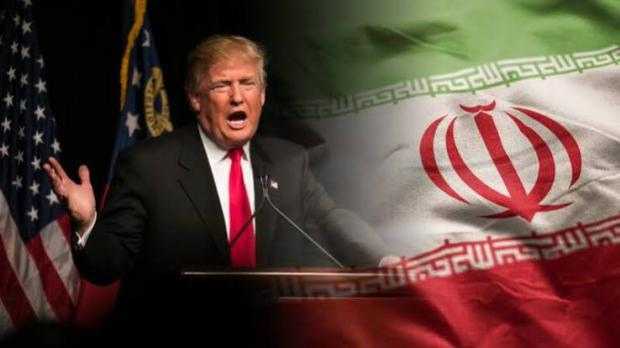
The US has now requested a new temporary ceasefire with Iran and is seeking a return to the collapsed and suspended MoU, with discussions to include Yemen, and with Trump seeking to make AnsarAllah a party to the negotiations.
Clearly Trump is angry, and fears that that the war is consuming his Presidency (and his legacy). Iran comprehensively rejected all negotiations throughout this last week and confirmed it will not start negotiations under any circumstances. Put simply, why would Iran consent to give the US time to regroup and rearm before launching another round of strikes on Iran when it has the US "on the run."
A return to the MoU whose credibility Trump repeatedly has shredded? Unlikely.
Will Schryver notes that rumours are swirling that the Pentagon is pressuring Trump to call off the war with Iran because the US has nearly exhausted its stockpiles of air-defence interceptors and stand-off strike missiles. The President's top aides are also uneasy about the prospect of a widening war in the Middle East, the alienation of key Gulf allies vulnerable to further Iranian attack, and the coming energy crunch. "Few if any in Mr. Trump's inner circle believed the plan to escalate was wise, said the two people briefed," the New York Times reports.
It seems too that jiggery-pokery over the exact fuel supply situation in the US may have played a part in Trump's backtrack. Larry Johnson reports that –
A] brief prepared by Karl Miller investigates how the US military's covert fuel procurement and export operations are depleting the nation's diesel and jet fuel reserves, particularly during a period when domestic stocks are already critically low.
In gist, Miller says that –
much of this (covert) fuel export is routed through opaque channels, such as the Rotterdam trans-shipment hub, where the final military or foreign allocation is not publicly reconciled, leaving the American economy exposed to shortage risks – whilst military and foreign operations – 'notably Israel' – receive priority access.
This report by Miller seems to connect to the US authorities' open manipulation of oil benchmarks designed to convince markets that there is no danger of fuel shortages arising from the ongoing emergency release from the SPR (Strategic Petroleum Reserves) of 172 million barrels that was initiated to counter supply shocks from the conflict with Iran.
Whilst the statuary security floor is 250 million barrels (the current level is around 300), nonetheless the narrative is being promoted that the drawdown can go even further (to 70 mbpd). But can it? What is the minimum level the strategic oil reserves can go to? It is more complicated than just one big vat of crude that has a specific level. The SPR is composed of many caverns, and contains different types of crude oil, that are being drawn down at different rates, with some caverns likely to collapse if drained too far. In short, nobody knows how far is too far. It's all guesswork.