










Breaking News
 Chocolate is love! Not anymore!
 The final goal is to eradicate humanity as we know it...
 Mike Adams joins Col. Daniel Davis to warn the Iran war is pushing the world toward famine
 Police Are Deploying 60 MPH Autonomous Drones to Read Your License Plate from the Sky
Top Tech News
 Elon Vows AI-Made 'Odyssey' After Blasting Nolan's Take On Homer
 Anthropic is launching its own drug discovery programs for rare diseases using Claude...
 SpaceX AI Satellites Will Have 250 Kilowatts of Power
 Chinese researchers have developed a sodium-metal battery that can fully charge in just 4 minutes...
 SpaceX Starship Flight 13 in 3 Days - Thursday July 13
 Chinese Scientists Develop Nuclear Battery Using Carbon-14
 Teleoperated humanoid robots complete first-ever live surgery
 Floating capsule auto-disinfects water without chemicals or battery
 Modular Reactors To Solve Data Center Hysteria?
 DeepSeek Developing In-House AI Chip In Bid To Cut Nvidia Reliance



What Are the Keys to 1500 Starship Launches in 2028 ?
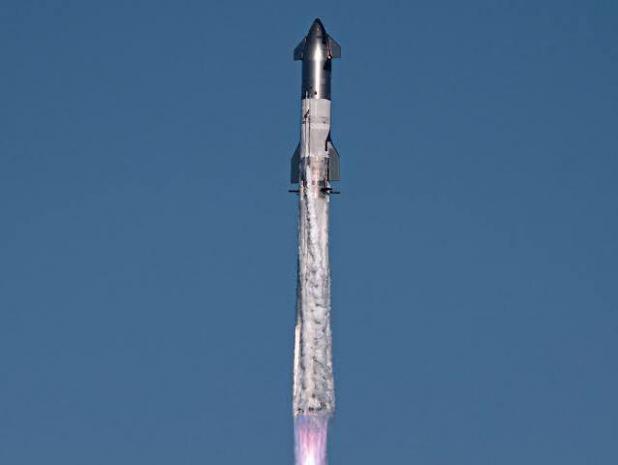
The booster has been recovered 3 times and reused twice. The new booster needs engine software improvements and the upper stage starship catch will be attempted in the next flight (14). If booster and starship are both being recovered then getting them back in better condition for fast turnaround will be key. However it seems 1-3 week turnarounds will be achievable in 2027 based on rocket operations.
There is more to high launch cadence. There is the need to build cryogenic plants, launch towers, and regulatory headroom fast enough to feed them — and today's approved ceiling is about 145 flights.
SpaceX has said – It's no secret that we intend to launch Starship a lot, targeting thousands of flights per year. That cadence will require the ability to launch from many" sites.
That is a genuinely staggering number, and the instinct is to treat it as a rocket-engineering question — can the vehicle be made reliable and reusable enough? But rocket reusability is the part SpaceX has already demonstrated in principle. The things that will actually decide whether 2028 looks like 1,500 flights or 150 are industrial and bureaucratic. How much liquid oxygen you can make on site, how many towers you have, how fast a pad can cycle, and what the FAA has signed.
Propellant
Every Starship stack swallows roughly 4,600 tons of propellant — about 1,000 tons of liquid methane and 3,600 tons of liquid oxygen. That number is fixed by physics and doesn't improve with practice. Multiply it by the cadence targets and the logistics stop being logistics and become heavy industry.
Starbase is being upgraded with air separation units that pull oxygen and nitrogen straight out of the atmosphere, methane liquefaction plants, and an eight-mile natural gas pipeline feeding the site. Florida's LC?39A work reportedly includes propellant generation systems among roughly 800,000 square feet of improvements.
The rule of thumb worth carrying. A launch complex that cannot make its own propellant cannot exceed a few hundred flights a year, regardless of how many pads it has. Every major site needs its own plant, sized on day one for the cadence the site is eventually meant to carry — because you cannot retrofit an air separation unit in a quarter.
Pads and towers
Cadence is a product of two numbers. How many pads you have and how fast each one cycles. Almost every published estimate fixes the second and solves for the first, which makes the plan look like a construction problem. Fix it the other way and it becomes an operations problem — a much cheaper one.