










Breaking News
 CBDCs Are the Distraction – Stablecoins Are the Real Threat, Warns Catherine Austin Fitts
 Erika Kirk Calls Me "That B*tch". More Exclusive Photos From Charlie's SUV. | Ep 363
 Hardworking homeowners say unauthorized groups are taking over their community pools...
 Thomas Massie on Why The Epstein Files Are STILL Being Hidden and Israel Merging with US Military
Top Tech News
 Anthropic is launching its own drug discovery programs for rare diseases using Claude...
 SpaceX AI Satellites Will Have 250 Kilowatts of Power
 Chinese researchers have developed a sodium-metal battery that can fully charge in just 4 minutes...
 SpaceX Starship Flight 13 in 3 Days - Thursday July 13
 Chinese Scientists Develop Nuclear Battery Using Carbon-14
 Teleoperated humanoid robots complete first-ever live surgery
 Floating capsule auto-disinfects water without chemicals or battery
 Modular Reactors To Solve Data Center Hysteria?
 DeepSeek Developing In-House AI Chip In Bid To Cut Nvidia Reliance
 America just took three brand-new nuclear reactors critical in thirty days, a first for any...



The Iran War and the Manipulation of Oil Markets
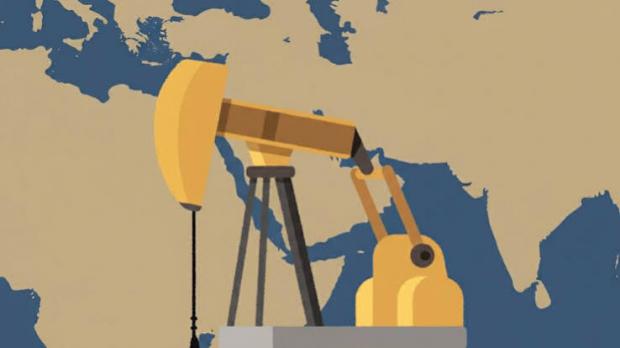
Our Iran War has fully resumed and last week I published an article on that subject.
After many weeks of negotiations, President Donald Trump finally signed a "Memorandum of Understanding" with Iran on June 17th. This was intended to set the stage for 60 days of additional peace talks aimed at permanently ending the conflict.
Unfortunately, that preliminary agreement remained on life-support during its entire existence. Many of its provisions were ignored or violated from almost the very first day, and within three weeks the plug was pulled, restarting the war. The end finally came on Monday when the Iranians declared that they had once again closed the Strait of Hormuz to oil tankers and other cargo traffic.
Aside from briefly recapitulating the current state of the conflict and its origins, my article also discussed the impact upon global oil supplies. Near the end I included a chart showing the trajectory of oil futures prices during 2026.
After months of rising and falling, on July 10th the widely quoted price for a barrel of WTI oil stood at around $71, almost exactly the same as its $67 price on February 27th, the day before the war originally began.
Thus, more than four months of war and blockade had left oil prices virtually unchanged. Some 1.3 billion barrels of oil had been lost and global stockpiles had reached their lowest levels in many decades, but prices had returned to their prewar levels, an extremely strange development that had important political consequences.
This complete stability must have surely helped convince Trump that he held a very strong hand on that issue and there would be few adverse consequences in the oil markets to his full resumption of the war. Indeed, just after he began bombing and blockading Iran once again, he declared at a press conference that he expected oil prices to fall because the world had "an oil glut."
Back in April, Trump had ridiculed those who had warned him that oil prices would skyrocket if he attacked Iran, saying that they had been proven completely wrong. So with oil prices having now fully returned to peacetime levels, he may have been emboldened to attack Iran a second time.
For these reasons, global oil prices and the markets that set them have been a central element of our war with Iran, and I regularly discussed these matters in my articles.
The Iranians had threatened for decades that if they were attacked, they would close the Strait of Hormuz to oil shipments and other cargo traffic, and the conventional wisdom had been that the resulting loss of supply would quickly cause a huge spike in global prices.