










Breaking News
 CBDCs Are the Distraction – Stablecoins Are the Real Threat, Warns Catherine Austin Fitts
 Erika Kirk Calls Me "That B*tch". More Exclusive Photos From Charlie's SUV. | Ep 363
 Hardworking homeowners say unauthorized groups are taking over their community pools...
 Thomas Massie on Why The Epstein Files Are STILL Being Hidden and Israel Merging with US Military
Top Tech News
 Anthropic is launching its own drug discovery programs for rare diseases using Claude...
 SpaceX AI Satellites Will Have 250 Kilowatts of Power
 Chinese researchers have developed a sodium-metal battery that can fully charge in just 4 minutes...
 SpaceX Starship Flight 13 in 3 Days - Thursday July 13
 Chinese Scientists Develop Nuclear Battery Using Carbon-14
 Teleoperated humanoid robots complete first-ever live surgery
 Floating capsule auto-disinfects water without chemicals or battery
 Modular Reactors To Solve Data Center Hysteria?
 DeepSeek Developing In-House AI Chip In Bid To Cut Nvidia Reliance
 America just took three brand-new nuclear reactors critical in thirty days, a first for any...



Oil Shock, AI Boom Complicate Fed's Path, Vice Chair Jefferson Says
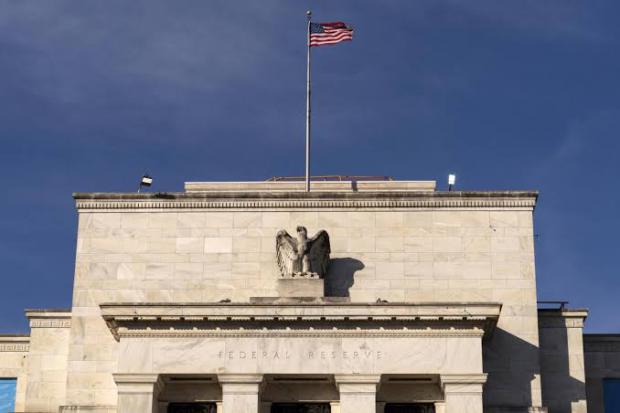
Federal Reserve Vice Chair Philip Jefferson told an audience at Stanford University on July 16 that monetary policy is facing a "delicate balancing act," as overlapping shocks from the Middle East conflict, post-pandemic imbalances, and newly erected trade barriers keep inflation above target and threaten to unmoor expectations.
The remarks, delivered at the Stanford Institute for Economic Policy Research, came just hours after gold prices briefly pierced $4,017 per ounce, an intraday high that some investors read as a signal of diminished confidence in the purchasing power of the dollar. With consumer prices still running above the Federal Open Market Committee's 2 percent goal and unemployment at 4.2 percent, Jefferson acknowledged that the path back to stability is not straightforward.
The Vice Chair described the jump in oil prices as a classic supply shock that has already tightened financial conditions, even though crude has pulled back from its recent highs. He noted that the United States is now a net exporter of oil and uses less energy per unit of output than in past cycles, factors that should limit the effect on demand. However, he also warned that the rapid succession of shocks raises the odds that "inflation expectations become unanchored," language that has historically preceded tighter policy. If price pressures do not ease, Jefferson said, "it could be appropriate to reconsider our current policy stance," a stance that has kept the federal-funds target in a 3.50 to 3.75 percent range since June.
Artificial intelligence introduced a further complication. Business surveys, according to Jefferson, show a marked increase in AI adoption, and capital spending on data centers and advanced computing equipment "have increased substantially." He argued that AI could eventually lift productivity and the neutral real rate (r*), but the front-loaded investment boom risks pushing near-term inflation higher. Estimating r*, he cautioned, is difficult, and any increase could be offset by rising income inequality, a dynamic that some economists cite as an example of the limits of central planning.
Jefferson reiterated the Federal Reserve's dual mandate of maximum employment and price stability, but acknowledged that many shocks are extremely difficult, if not impossible, to predict, especially in real time, when policymakers must judge whether they are demand driven or supply driven. Monetary policy works with long and variable lags, he said, so overreacting risks recession while underreacting risks sustained inflation. That tension helps explain why June's meeting produced no change in rates, even as several committee members signaled a bias toward tightening.
For savers and investors, one gauge of sentiment is visible in the gold chart. The metal's climb above $4,000 suggests continued unease that the Federal Reserve's tools may not be sufficient to offset simultaneous energy, technology, and policy shocks. Until the data provide clearer evidence of disinflation, Jefferson's "balancing act" is likely to keep both policymakers and markets under pressure.