










Breaking News
 CBDCs Are the Distraction – Stablecoins Are the Real Threat, Warns Catherine Austin Fitts
 Erika Kirk Calls Me "That B*tch". More Exclusive Photos From Charlie's SUV. | Ep 363
 Hardworking homeowners say unauthorized groups are taking over their community pools...
 Thomas Massie on Why The Epstein Files Are STILL Being Hidden and Israel Merging with US Military
Top Tech News
 Anthropic is launching its own drug discovery programs for rare diseases using Claude...
 SpaceX AI Satellites Will Have 250 Kilowatts of Power
 Chinese researchers have developed a sodium-metal battery that can fully charge in just 4 minutes...
 SpaceX Starship Flight 13 in 3 Days - Thursday July 13
 Chinese Scientists Develop Nuclear Battery Using Carbon-14
 Teleoperated humanoid robots complete first-ever live surgery
 Floating capsule auto-disinfects water without chemicals or battery
 Modular Reactors To Solve Data Center Hysteria?
 DeepSeek Developing In-House AI Chip In Bid To Cut Nvidia Reliance
 America just took three brand-new nuclear reactors critical in thirty days, a first for any...



The Day the Grid Failed: The Seventeen Minutes That Exposed the Fragile Foundations of Modern...
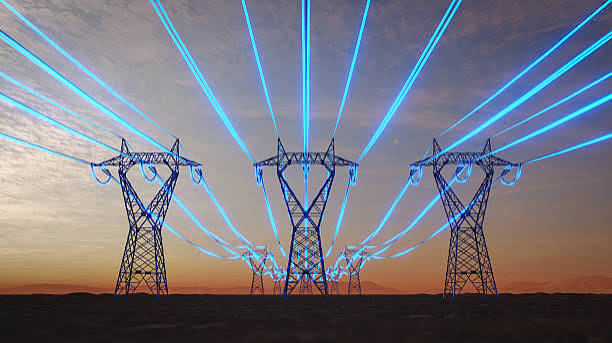
By the time the first official statement reached the public, the statement itself no longer mattered. Television networks were already off the air across much of the continent, mobile networks had fragmented into isolated pockets, and the internet—once assumed to be nearly indestructible—had become a collection of disconnected islands separated by an invisible wall of silence. Rumors traveled farther than verified information, speculation outran evidence, and for the first time in generations millions of people discovered how completely their understanding of the world depended on a stream of data they had always taken for granted. Historians would later argue over the precise moment the crisis began, but among engineers and emergency planners there was remarkably little disagreement. The collapse did not start when cities lost power. It started hours earlier, hidden inside measurements so small that they resembled ordinary background noise rather than the opening chapter of the largest infrastructure failure in modern history.
Three months before the blackout, engineers working at several independent transmission operators had submitted technical reports describing unusual synchronization anomalies affecting equipment connected to long-distance high-voltage networks. None of the incidents resulted in service interruptions. Most lasted only seconds before disappearing, leaving behind little more than incomplete diagnostic logs and confused maintenance teams. Similar anomalies occur every day somewhere in the world, usually explained by faulty sensors, timing errors, firmware bugs, or brief disturbances caused by weather. On paper, nothing justified escalating the reports beyond routine analysis. Yet a handful of specialists noticed an uncomfortable coincidence. Facilities separated by hundreds of kilometers, operated by different companies using different hardware, were documenting nearly identical irregularities with surprising consistency. Individually, each report looked insignificant. Viewed together, they formed a pattern that nobody could adequately explain.
Among the few people attempting to connect those isolated observations was electrical systems analyst Dr. Elena Varga, whose career had been built on studying failures that most people never noticed. She was not the kind of scientist who chased extraordinary theories. Colleagues often described her as frustratingly cautious, the sort of researcher who preferred saying "we don't know yet" over making bold predictions. Her office shelves held decades of technical journals instead of trophies, and she had spent more time inside substations than conference halls. When the anomaly reports began arriving from different operators, she did not suspect sabotage or some revolutionary new technology. She assumed someone had discovered an obscure software defect hidden inside synchronization protocols used by aging infrastructure. What concerned her was not the disturbance itself but the remarkable geographical distribution. Independent systems are supposed to fail independently. When they begin exhibiting nearly identical behavior over enormous distances, experienced engineers stop asking what is broken and start asking what every affected system has in common.