










Breaking News
 The Technocrats Want Your Water: UN's "Global Water Bankruptcy" Exposed
Senate Vote Stuns Netanyahu, Shows Support For Israel Slipping
 Kushner And Witkoff: Diplomats Or Shady 'Deal-Makers'?
 People Making Money from Bubbled Stocks Don't See That They're Financing the Control Grid
Top Tech News
 Modular Reactors To Solve Data Center Hysteria?
 DeepSeek Developing In-House AI Chip In Bid To Cut Nvidia Reliance
 America just took three brand-new nuclear reactors critical in thirty days, a first for any...
 Your brain doesn't peak in your 20s after all: Study reveals your mind is at its sharpest betwee
 Compasses, not maps: China is building a different type of AI
 The Return of the Ekranoplan
 Farewell, atom-smashing Large Hadron Collider
 This is already starting.
 The Crosley IcyBall
 It's Not a Conspiracy Anymore: Med Beds Exist and Trump Knows It



The Technocrats Want Your Water: UN's "Global Water Bankruptcy" Exposed
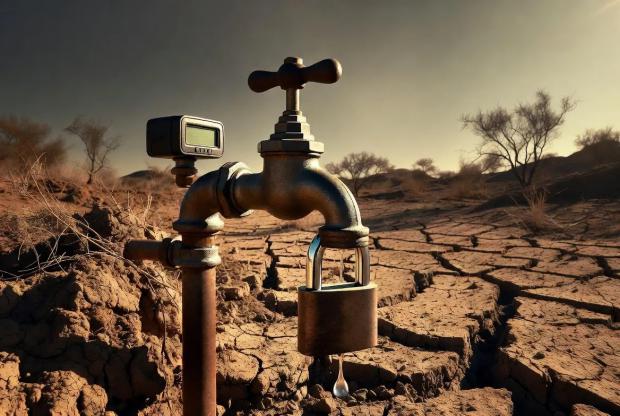
In 2005 the CEO of (WEF partner) Nestlé famously announced that water was not a human right.
Having announced their intentions, the technocrats set about crafting a crisis narrative to take control of this precious resource.
This year—not coincidentally coinciding with the UN/WEF announcements that we were entering a food crisis and must adopt genetically engineered crops—that crisis rhetoric was amped up to 11.
In a January 2026 report, the United Nations University Institute for Water, Environment and Health (UNU-INWEH) declared "Global Water Bankruptcy." Far worse than a mere water crisis, "water bankruptcy" describes a persistent post-crisis state wherein long-term human withdrawals from surface and groundwater exceed inflows, causing "effectively irreversible degradation" of water capital.
The term "bankruptcy" itself telegraphs their intention to seize it all, framing society as insolvent and taking our water into receivership so that technocrats can step in control the resource.
The UNU-INWEH, naturally, was quite thrilled, calling the need for a form of global "bankruptcy management" governance an "opportunity that cannot be overlooked" [PDF, p6] They quite openly salivate at a chance to codify their temporary crisis measures into permanent technocratic oversight of this lasting condition. Specifically, they cite a need for:
• Transparent [monitoring and] accounting of and enforceable limits on water use,
• protection of "water-related natural capital,"
• equity-focused transitions that protect vulnerable groups (smallholders, women, Indigenous communities, low-income populations),
• and a rebalancing of demand, restructuring of rights, and reorienting of infrastructure, technology, finance, and trade.
Let's look at each.