










Breaking News
 Mike Adams Joins Scott Kesterson to Discuss Local AI, Decentralized Intelligence and Human Freedom
 The James Corbett Book (and Movie!) Club
 Tiny, modular pod attacks macro photography's lighting nightmare
 Laser-beam mosquito shooter is now available for preorder
Top Tech News
 Portable 1MW Kaleidos Microreactor Secures Critical Nuclear Fuel Deal Through 2030s
 This New All-In-One Range Extender Is Ready To Go Into Any Electric Truck
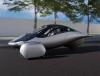 Aptera Reveals The Secret To Building Its Solar EV: China
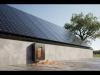 High-voltage sodium home battery emerges as affordable rooftop solar solution
 Peter Thiel-Funded Company Anduril to Triple the Number of Autonomous Surveillance...
 China has released Origin Pilot, claimed to be the world's first open-source operating system...
 ShieldAI XBAT Drone Fighters Can Give A Fighter Drone Wing to Every US Destroyer
 Brain organoids, kept alive more than five years, matured like human brains
 Parkinson's patient's tremors VANISH within minutes of GROUNDBREAKING treatment
 NEW HOMES ARE BUILT WITH THIS AND IT'S MAKING YOU SICK


The Return of the Ekranoplan

This was the principle that would have powered the Soviet Union's secret project, the Caspian Sea Monster. Otherwise known as the Ekranoplan project, the great vehicle now lies abandoned on the coast of the Caspian Sea. But the project's ambitions weren't left forgotten.
The Liberty Lifter is the new ground effect vehicle being developed by The US Defense Department's research arm, DARPA. Like a hovercraft, it travels across the water on a cushion of air made by traveling one wing length above the water, allowing it to move quickly and efficiently. Its massive size keeps it stable, and makes it less vulnerable to the movement of the waves.
Other ground effect vehicles include the Pelican, designed by the Boeing company, and the Spruce Goose, built by the millionaire Howard Hughes as the world's biggest aircraft in the 1940s.
The Flying Ship Company is also currently developing a smaller ground effect vehicle than the Liberty Lifter. Their goal is to make a more commercially-focused cargo transport, to be used for shorter routes, such as between islands in the Caribbean and the Mediterranean.
These projects are still under development, and will not be taking to the air until at least 2027. The future of maritime transportation might be in these ground effect vehicles.
Which one will be the first to take the title of the next Sea Monster?