










Breaking News
 Cause of death for Lindsey Graham revealed as FBI swarms house of US Senator after his...
 "What Makes It Even Stranger...":
 The World Is Being Rewired: Gold, Oil, China and the New Global Order
 Tehran Declares Hormuz Closed, But Ships Are Still Transiting
Top Tech News
 Modular Reactors To Solve Data Center Hysteria?
 DeepSeek Developing In-House AI Chip In Bid To Cut Nvidia Reliance
 America just took three brand-new nuclear reactors critical in thirty days, a first for any...
 Your brain doesn't peak in your 20s after all: Study reveals your mind is at its sharpest betwee
 Compasses, not maps: China is building a different type of AI
 The Return of the Ekranoplan
 Farewell, atom-smashing Large Hadron Collider
 This is already starting.
 The Crosley IcyBall
 It's Not a Conspiracy Anymore: Med Beds Exist and Trump Knows It



Tehran Declares Hormuz Closed, But Ships Are Still Transiting
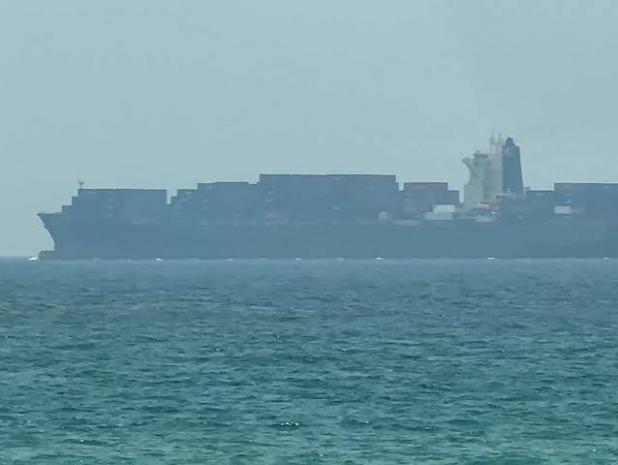
"Commercial traffic through the Strait of Hormuz continued at reduced levels, with vessels transiting via both the southern Omani corridor and the northern Iranian-controlled route," the Joint Maritime Information Center wrote in a note early Sunday.
JMIC added, "Traffic patterns continued to reflect operator caution following recent attacks."
US Central Command said the overnight strikes on Iran were to neuter its ability to attack commercial ships in the Hormuz chokepoint after a Cyprus-flagged container vessel was heavily damaged near the critical waterway. Iranian media reported explosions across key coastal and energy facilities, including Bushehr, Asalouyeh, and Bandar Abbas.
Our overnight US-Iran wrap detailed that Tehran retaliated with missile and drone attacks on US-linked military facilities in Jordan, Qatar, Kuwait, Bahrain and Oman. Qatar said it intercepted incoming missiles, while air-defense sirens were reported across several Gulf states. Read the report here.
Despite Tehran declaring the Hormuz chokepoint "closed until further notice," JMIC's update on the southern Omani shipping corridor and Bloomberg data show a trickle of activity, which may only suggest Tehran's total control of the strait is waning.
As for the normalization of tanker flows in the Hormuz chokepoint, the timeline now appears to be slipping. Many institutional desks had already priced in a gradual reopening and lowered their Brent and WTI forecasts (Citi was the latest), but that outlook now looks on hold.