










Breaking News
 What Makes America Great?
 Divided America searches for something to celebrate on its 250th birthday
 Startling new images show what YOUR city will look like in 250 years...
 Actor Matthew McConaughey Shares Inspiring, Patriotic Speech...
Top Tech News
 Our Diesel-Electric Truck Is So Quiet the Military Wants One
 World's first hotel entirely staffed by robots to open in 2027
 Researchers in China are ignoring bug spray, citronella, and netting.
 Our bodies may be able to regrow lost limbs after all
 Chinese cars go blacker than black via hybrid nano tech
 World first: Human embryo model grows its own organs – in the lab
 Dead lithium batteries revived to 95% capacity via electrochemical bath
 Compact laser engraver levels up your DIY crafts setup
 'Groundbreaking' Potential Lupus Cure Sends Patients into Remission, Allowing Dreams...
 SpaceX Orbital Travel and Orbital Hotels Need Starfall – Getting Back Safe and Cheap is Exciting



America's Libertarian Revolution
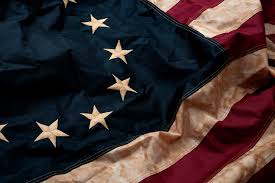
With the beginning of the American Revolutionary War at the outbreak of Lexington and Concord, two truths about the Revolution already stand out clearly. One is that the Revolution was genuinely and enthusiastically supported by the great majority of the American population. It was a true people's war against British rule. The American rebels could certainly not have concluded the first successful war of national liberation in history, a war against the world's greatest naval and military power, unless they had commanded the support of the American people. As David Ramsay, the first great historian of the American Revolution, put it in 1789: "The War was the people's war…the exertions of the army would have been insufficient to effect the revolution, unless the great body of the people had been prepared for it, and also kept in a constant disposition to oppose Great Britain.1 "
A second truth that emerges is the egregious fallacy of the view endemic among historians of all ideological persuasions that there is a large and necessary dichotomy between political or moral principle and economic self-interest. Historians friendly to the Revolution have insisted that the Americans fought for political freedom, for independence, for constitutional rights, or for democracy; critical historians maintain that the fight was merely for economic reasons, for defense of property and trade against British interference. But why must the two be sundered? Why may not a defense of American liberty and property, of political and economic rights be conjoined? The merchants rebelling against the stamp tax, or sugar or tea taxes, or restrictions of the Navigation Laws, were battling for their rights of property and trade free from interference. In doing so, they were battling for their own property and for the rights of liberty at the same time. The American masses, similarly, were battling for all property rights, for their own as well as those of the merchants, and acting also in their capacity as consumers fighting against British taxes and restrictions.