










Breaking News
 The AI Bird-Flu Scenario They Just Published
 Japan's first robot ambulance works the 9-1-1 lines for humanoids
 Cheap smartphone add-on pinpoints hidden cameras to shut down spies
 The $600 Tank That Beats a $10,000 Powerwall
Top Tech News
 Terrifying AI Behavior Even Its Creators Couldn't Explain
 WW3 Near-Miss? AI Hallucinated Nuclear Weapons Components Aboard Chinese Vessel Bound For Iran
 Stripe Is Building the Toll Road for the Machine Economy
 Toyota Dakar hopeful swaps twin-turbo V6 for hydrogen fuel cells
 4-min turbo-inflatable cubic camp castle is now available in the USA
 Researchers Used Claude To Hack OpenAI Employee Accounts
 Chinese Scientists Develop New Oil Refining Method That Cuts Energy Use by 90%
 World's smallest CT scanner fits in the palm of your hand
 The Tesla Roadster will blow people's minds
 Peter Thiel-Funded Company Anduril to Triple the Number of Autonomous Surveillance Towers...



Our bodies may be able to regrow lost limbs after all
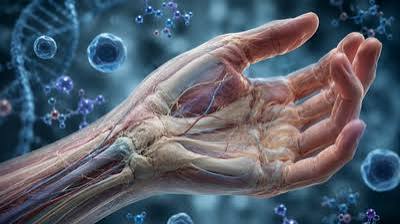
Or perhaps we do. An experiment on mice conducted by a team of researchers from Texas A&M University has revealed a healing sequence in mammalian physiology that rebuilds lost skeletal structure, albeit with less than perfect results.
The discovery may not give us the tools to return whole fingers, arms, or legs to amputees any time in the near future, but it just might give us a better idea of what our bodies are working with when recovering from traumatic injuries.
"People should start thinking about using these signals during the healing process," says senior author Ken Muneoka, a developmental biologist at the Texas A&M College of Veterinary Medicine and Biomedical Sciences. "Even shifting the response slightly away from scarring could have real benefits."
Destruction of mammalian tissues typically triggers a complex mix of responses from the immune and repair systems. Platelets in the blood form clots, white cells are summoned, dead cells are cleared away, and a cascade of chemical signals sounds the alarm to draw in units known as fibroblasts.
These specialized cells multiply and close up wounds to reduce the risk of infection, threading the site with stiff strings of collagen and fibronectin for extra support.
What the process gains in speed and efficiency, it loses in regenerative flexibility, choosing a path of rapid scar-growth over the creation of a regenerative nub of tissue called a blastema.
"It's as if these cells can move in two different directions," says Muneoka. "They could either make a scar or make a blastema. Our research focused on redirecting the behavior of fibroblasts already present at the injury site."
To determine whether a healing wound could still produce a blastema in mammals, Muneoka and his team artificially applied fibroblast growth factor 2 (FGF2) to the closed stumps of amputated mouse digits.
Sure enough, tissue that resembled a blastema formed. While the cells failed to differentiate into new skin and bone, the change demonstrated that the regenerating process didn't necessarily hit a dead end in mammals.
Next, the researchers added a tiny bead containing bone morphogenetic protein 2 (BMP2), forcing the blastema to produce new pieces of bone, ligament, and tendon tissue.