










Breaking News
 TESLA and SPACEX Can Get100 GIGAWATTS of Power for AI Data Centers Using Modular...
 TESLA Growth is Back and GLOBAL AI Energy Empire No One's Talking Will Be HUGE
 Podcast - Catherine Fitts - Stargate & Surveillance: How Taxpayers Finance The Data Center Matrix
 The Hottest 4th Of July Ever Could Set More Than 300 New Records And The U.S. Wheat Harvest...
Top Tech News
 Our Diesel-Electric Truck Is So Quiet the Military Wants One
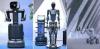 World's first hotel entirely staffed by robots to open in 2027
 Researchers in China are ignoring bug spray, citronella, and netting.
 Our bodies may be able to regrow lost limbs after all
 Chinese cars go blacker than black via hybrid nano tech
 World first: Human embryo model grows its own organs – in the lab
 Dead lithium batteries revived to 95% capacity via electrochemical bath
 Compact laser engraver levels up your DIY crafts setup
 'Groundbreaking' Potential Lupus Cure Sends Patients into Remission, Allowing Dreams...
 SpaceX Orbital Travel and Orbital Hotels Need Starfall – Getting Back Safe and Cheap is Exciting



AI Doomsday Warnings Distract from More Imminent AI Concerns
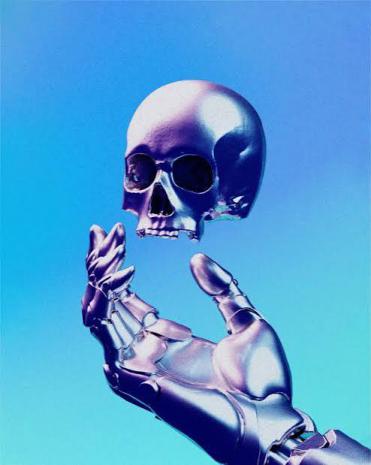
And therefore we need to embrace it, lest we look like a Luddite and let China win (whatever that means). Yet, simultaneously, a lot of people also are afraid because of AI. Very afraid. And sometimes, we're told that we should be afraid too. However, in public discourse surrounding AI, there often can be a lack of detail regarding what specifically we're supposed to be afraid of. Sometimes it is not even clear what is meant by the term "AI."
Technically speaking, as I have touched on previously, one could argue (as some older computer scientists do) that AI is an umbrella term for a family of algorithms based in math that sometimes dates back more than a half-century.
Practically speaking, numerous programs we've been living with for years like Google Maps and Amazon's recommender system can be thought of as AI despite their lack of novelty. Yet, in public discourse, the term AI tends to refer to generative AI (e.g, ChatGPT), as well as any number of hypothetical future programs that will do everything humans can do but better, will therefore both solve all our problems while also putting most of us out of work, and also eventually just might decide to go full Skynet on us unless they decide that we're not worth the trouble.
(Sounds pretty sexy. Perhaps someone should make a series of movies about it. Perhaps people will even like two out of five of them.)
Unfortunately, though, these more hyperbolic, sci-fi depictions of the threat(s) posed by AI tend to get more attention than, and consequently distract from, more realistic and more imminent threats pertaining to privacy, freedom, autonomy, and even just a way of life many of us have come to enjoy. Automatic license plate readers, facial recognition, digital grandmothers, mandatory drunk and distracted driving detection programs, any of the technologies "grandson" was shouting about in "Autonomous Delivery Robot," and wearable recording devices that transcribe and process in-person conversations for the anti-social and easily distracted are just of a few of the more realistic threats that come to mind. (And this by no means is a complete list).
Therefore, I tend to appreciate when members of our ruling class can take a morning to have a measured conversation about fairly well-defined threats posed by this technology (or suite of technologies), as was done at the US House of Representatives' Cybersecurity and Infrastructure Protection Subcommittee's June 4 meeting on the "AI Security Landscape."
Superficially, the meeting's discussion could probably be framed in terms of "Is the greatest threat posed by AI an external one in the form of foreign hackers looking to exploit vulnerabilities in the software controlling the United States' critical infrastructure or an internal one born from the lack of regulation and accountability for AI's use at home?"