










Breaking News
 Evacuations begin as 'blockbuster' nor'easter barrels toward millions in 12 US states
 Trump's military prepares for Cuba as leaked Pentagon memo sends telling signal...
 Ford v. Hyundai: Henry Ford Must Be Turning In His Grave After New Report
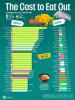 Switzerland Is Still The Most Expensive Place In The World To Eat Out
Top Tech News
 Tesla Model 3 killer charges from 10 to 97% in just 9 minutes
 World-first unpowered DNA computer sets speed record
 I Power 5 Buildings Off-Grid. Here's How
 The US government is pushing hard to get a working nuclear fission reactor into space by late 2028
 SpaceX Starmind AI in Space Radiator
 China Will Dominate Global Nuclear Energy Through 2035, Analyst Says
 These Absolutely Wild-Looking EVs Are Saudi Arabia's First Homegrown Cars
 BEYOND THE MOON: NASA plans a nuclear-powered fleet to push DEEPER into space
 Big Oil Backs Mazama's $135 Million Bet On Superhot Geothermal
 Quantum compass takes flight on Northrop's Lumberjack drone


New trigger for Alzheimer's disease may have been found
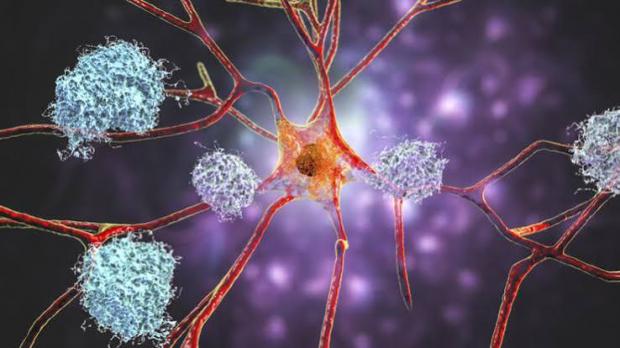
Researchers at the University of California, Riverside (UCR) say the earliest changes could instead happen inside nerve cells, where two key proteins appear to interfere with each other.
For years, much of the focus has been on amyloid beta, or a-beta, because it forms clumps in the brains of people with Alzheimer's. That link appeared well supported, especially since genetic mutations that increase a-beta levels are known to cause early-onset forms of the disease.
But attempts to treat Alzheimer's by removing these clumps have been largely unsuccessful, with thousands of trials failing to stop or reverse its progression.
Michael Kane, chief medical officer at Indiana Center for Recovery, told Newsweek that the findings of this study should not be seen as dismissing the amyloid theory entirely, but rather as refining it.
"I see these findings less as a rejection of the amyloid theory and more as a possible link between amyloid beta and tau," he said.