










Breaking News
 Your Car Was Never the Target
 JUST IN: Tucker Carlson Joins Alex Jones LIVE At 1PM CT To Break MASSIVE NEWS!
 The Evil Within, Part 1: The National-Security State
 Europeans Visiting U.S. for World Cup Fall in Love with America: 'The Most Wonderful People...**
Top Tech News
 World's first consumer wing-in-ground effect aircraft takes flight
 America's Military Readiness Depends On Deployable Nuclear Power
 License Plate Cameras Are About To Start Tracking A Lot More Than Just Your Car
 Heads up: Apparently the government is hiding cameras inside fake utility boxes
 Sodium Batteries And EVs That Power The Grid: Inside GM's Big Energy Push
 NUCLEAR ENGINE - UNLIMITED LUXURY - 20 YEARS WITHOUT REFUELING
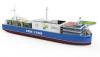 China Unveils Nuclear-Powered Floating Hub For Green Shipping
 China Launches World's 1st Commercial Brain Chip, Beating Elon Musk's Neuralink!
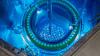 Modular next-gen US nuclear reactor goes critical
 How EMF's cause disease


The Market Is Starting To Price In Something Most People Still Don't See
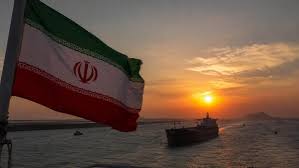
Most people still see the situation with Iran as another distant geopolitical story. It appears on television for a few minutes, disappears behind domestic political news, and then returns a few days later when another headline emerges. Investors, however, are beginning to treat it very differently. They are not watching the negotiations because they care about diplomatic symbolism. They are watching because a growing number of traders believe the global economy may be far more vulnerable to a prolonged disruption than policymakers are willing to admit.
The irony is that the biggest threat is no longer war itself. The biggest threat is uncertainty.
For months, markets convinced themselves that a deal between Washington and Tehran was only a matter of time. There would be disagreements, public threats and last-minute complications, but eventually economic reality would force both sides toward some form of compromise. That belief became so widespread that many investors stopped considering what would happen if the opposite occurred.
Now that assumption is being tested.
Over the last several days, optimism surrounding a diplomatic breakthrough has faded once again. Conflicting reports about the future of the negotiations have pushed oil markets into another period of volatility, and prices remain dramatically higher than they were before the crisis began. Brent crude recently climbed back above $95 per barrel after fresh uncertainty surrounding the talks, while industry executives warned that the market may still be underestimating the risks ahead.
What makes this particularly dangerous is that the global economy no longer has the same shock absorbers it once had.
Back in 2008, governments could throw enormous amounts of money at a crisis. During the pandemic years, central banks unleashed trillions of dollars in liquidity. Today many of those same governments are carrying debt loads that would have been considered extraordinary only a decade ago. Interest costs are rising. Economic growth is slowing. Consumers have spent years absorbing inflation that never fully disappeared. The financial system looks stable on the surface, but underneath that surface there are clear signs of fatigue.
That is why the Strait of Hormuz matters so much.
Most people know it is an important shipping route. What they often do not understand is how concentrated global energy flows actually are. In peacetime, roughly one fifth of the world's oil and liquefied natural gas moves through that narrow corridor. Think about that for a moment. One out of every five barrels of oil consumed somewhere on this planet depends on a maritime bottleneck that can be measured in miles rather than hundreds of miles.
The modern global economy was built on the assumption that this route would remain available.
Everything from airline tickets to fertilizer prices is connected to that assumption.