










Breaking News
 Does AIPAC really have too much power?
 California Is Facing A "Fuelmaggedon" As Fighting Erupts In The Middle East And The Strait
 Grand Theft World Podcast 285 | Ba'alroom Psyops with Guest Ryan Graham
 Why Socialism Fails
Top Tech News
 Robot Dives 1.5 Miles, Maps French Shipwreck With 86,000 Images And Recovers Artifacts
 Brain-inspired chip could reduce AI energy use by 70%
 CANCER HAS BEEN CURED
 "This is the first synthetic species," microbiologist J. Craig Venter told 60 Minutes'
 Humanoid robots are hitting the factories at an increasing pace
 Microsoft's $400 Billion Mistake Is Now a $200 Phone With Zero Tracking
 Turn Sand to Stone With Vinegar. Stronger Than Steel. Hidden Since 1627
 This is a bioprinter printing with living human cells in real time
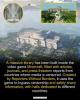 The remarkable initiative is called The Uncensored Library,...
 Researcher wins 1 bitcoin bounty for 'largest quantum attack' on underlying tech



Why Socialism Fails
Economics is not a zero-sum game in which one person's gain comes at another's expense; nor is it just about numbers or purposeless statistical aggregates, but conscious human action.
Ludwig von Mises, in his work Human Action, explains that individuals act to replace a less satisfactory state of affairs with a more satisfactory one. This process is inherently subjective and teleological, meaning that the values guiding economic activity are rooted in individual choices, and not in physical objects themselves.
Economic calculation serves as the bridge between the subjectivity of human desires and the objective reality of scarce resources. Consider a quantity of steel that could be used to build either a hospital or a factory. Without a system of prices reflecting society's preferences and the relative scarcity of resources, there would be no way to determine which of these projects creates greater value. Economic calculation, expressed through prices, allows for the comparison of alternatives, whilst directing resources toward their most-valued uses.
Similarly, consider an entrepreneur evaluating whether they should open a bakery. They must decide how much to invest in equipment, rent, labor, and so on. By comparing the costs of these factors with the expected revenue from sales, our entrepreneur can estimate whether the business will create value. If revenues are expected to exceed total costs and taxes, there will be profit.
Profit, therefore, is not merely a financial gain, but evidence that scarce resources have been allocated in ways that better satisfy societal needs, because society has, in an undirected way, decided its needs are satisfied this way. Conversely, losses would indicate that those resources should have been allocated to more valuable uses. Without prices, profits, and losses, the entrepreneur would have no way of knowing whether resources are being used efficiently.
In a complex economy with an advanced division of labor, individuals cannot rely solely on their own direct knowledge to decide how to allocate resources among many possible combinations. They require a common denominator that allows for the comparison of costs and benefits. This denominator is the price, which emerges from voluntary exchanges in the market.
Prices are not arbitrary numbers; they are determined by exchange values arising from the competitive interaction between consumers and producers. Price reflects the relative scarcity of a good in relation to all other possible uses of the same factors of production.