










Breaking News
 When a tornado hits in 2027...
 That is not a real fish. IT'S A ROBOT.
 The 13th Month They Deleted Why the World Switched to 12
 Area-51 S4 Insiders Deathbed Confession: Retrieved Alien Vehicles, Alien Interviews & Eisenhower
Top Tech News
 Robot Dives 1.5 Miles, Maps French Shipwreck With 86,000 Images And Recovers Artifacts
 Brain-inspired chip could reduce AI energy use by 70%
 CANCER HAS BEEN CURED
 "This is the first synthetic species," microbiologist J. Craig Venter told 60 Minutes'
 Humanoid robots are hitting the factories at an increasing pace
 Microsoft's $400 Billion Mistake Is Now a $200 Phone With Zero Tracking
 Turn Sand to Stone With Vinegar. Stronger Than Steel. Hidden Since 1627
 This is a bioprinter printing with living human cells in real time
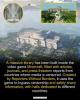 The remarkable initiative is called The Uncensored Library,...
 Researcher wins 1 bitcoin bounty for 'largest quantum attack' on underlying tech



When America Chose Empire

In 1901, on far-away Balangiga—a village in Eastern Samar of the Philippines—an American general gave an order that stripped away any notion of "civilizing" or "Christianizing" a foreign people: "Make it a howling wilderness."
General Jacob H. Smith's command—accompanied by the instruction to "kill everyone over ten"—was not an aberration. It was consistent with a decision made only a few years earlier about America becoming one of the "great" nations. The government would abandon its anti-imperial tradition and join the ranks of empire.
The events at Balangiga were recorded but not broadcast—the public today knows nothing about it. After months of occupation, abuses by American troops—including arrests, food deprivation, and humiliation of the local population—provoked a surprise Filipino attack on September 28, 1901 that killed 74 men of Company C, 9th US Infantry Regiment, "who were stationed in Balangiga to keep its small port closed and prevent any trading." The American response was swift and total. Villages were burned, civilians killed, and Balangiga was reduced, in Smith's words, to a "howling wilderness."
Smith was court-martialed—not for murder, but for "conduct to the prejudice of good order and military discipline." On President Teddy Roosevelt's order he was reprimanded and retired. Murdering and raping savages was considered more like a breach of etiquette than an atrocity.
The Founders' Vision
This was not the country of Washington or Jefferson, who each counseled avoiding foreign entanglements. As John Quincy Adams reminded Americans on July 4, 1821, the first settlers of Plymouth colony,
. . .at the eve of landing from their ship, . . . bound themselves together by a written covenant; and, immediately after landing, purchased from the Indian natives the right of settlement upon the soil.
Thus was a social compact formed upon the elementary principles of civil society, in which conquest and servitude had no part. The slough of brutal force was entirely cast off: all was voluntary; all was unbiassed consent; all was the agreement of soul with soul.
The American ideal, in other words, rested on voluntary association and consent. Even settlement, Adams noted, was grounded in purchase and agreement, not conquest.