










Breaking News
 From "Don't Be Evil" To Drone King: Eric Schmidt's Interceptors Deployed With U.S.
 Pirates Of The Arabian
 UAE Threatens Military Response After Iran Missile Attack Results In Injuries, Fire At Key Oil Site
 WAR UPDATE: Israel's Newest Bombing Campaign, the Move on China and Trump's Loyalty to Netan
Top Tech News
 Robot Dives 1.5 Miles, Maps French Shipwreck With 86,000 Images And Recovers Artifacts
 Brain-inspired chip could reduce AI energy use by 70%
 CANCER HAS BEEN CURED
 "This is the first synthetic species," microbiologist J. Craig Venter told 60 Minutes'
 Humanoid robots are hitting the factories at an increasing pace
 Microsoft's $400 Billion Mistake Is Now a $200 Phone With Zero Tracking
 Turn Sand to Stone With Vinegar. Stronger Than Steel. Hidden Since 1627
 This is a bioprinter printing with living human cells in real time
 The remarkable initiative is called The Uncensored Library,...
 Researcher wins 1 bitcoin bounty for 'largest quantum attack' on underlying tech



The 13th Month They Deleted Why the World Switched to 12
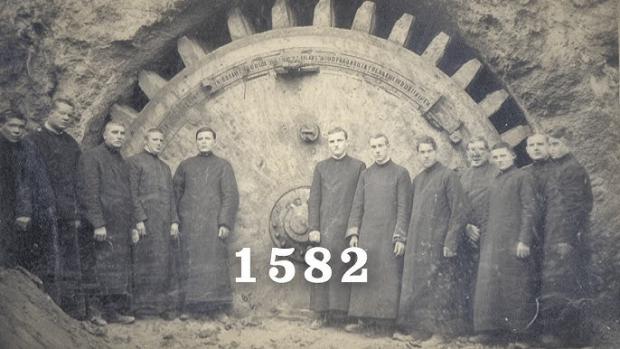
September means seven, October means eight, November means nine, and December means ten — yet they are the 9th, 10th, 11th, and 12th months. This is the hidden history of the 13-month calendar, the Roman calendar rewrite, the Gregorian reform, the Ishango Bone, lunar timekeeping, and why humanity may have lost a cleaner way to measure time.
Why do our month names no longer match their numbers? Why does September mean "seven" if it is the ninth month? Why do we live on a 12-month calendar when the moon still moves in roughly 13 cycles per year? This episode traces the forgotten history of calendar reform — from the Ishango Bone and ancient lunar counting, to Rome's manipulation of time under Numa Pompilius and the Pontifices, to Julius Caesar's "year of confusion," the Gregorian deletion of days in 1582, and the modern 13-month calendar movement backed by George Eastman, Kodak, and the League of Nations.
This is not just a story about dates. It is about power, timekeeping, lunar cycles, solar calendars, Roman control, religious resistance, and the possibility that 13 was not feared because it was unlucky — but because it preserved an older structure of reality that institutions replaced. From Ethiopia's living 13-month calendar to the mathematics of equal months, this is the deeper story of how the modern calendar was built, what it erased, and why almost nobody questions it.