










Breaking News
 Did You Notice How Climate Alarmism Just Stopped?
 'They're going to come for me': Ex-FBI deputy director reveals he's 'living in f
 Trump Pulling 5,000 US Troops From Germany In Punitive Move Amid Merz Spat
 A Robot Economy: Who Gets Rich, Who Gets Left Behind
Top Tech News
 Robot Dives 1.5 Miles, Maps French Shipwreck With 86,000 Images And Recovers Artifacts
 Brain-inspired chip could reduce AI energy use by 70%
 CANCER HAS BEEN CURED
 "This is the first synthetic species," microbiologist J. Craig Venter told 60 Minutes'
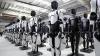 Humanoid robots are hitting the factories at an increasing pace
 Microsoft's $400 Billion Mistake Is Now a $200 Phone With Zero Tracking
 Turn Sand to Stone With Vinegar. Stronger Than Steel. Hidden Since 1627
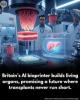 This is a bioprinter printing with living human cells in real time
 The remarkable initiative is called The Uncensored Library,...
 Researcher wins 1 bitcoin bounty for 'largest quantum attack' on underlying tech



A Robot Economy: Who Gets Rich, Who Gets Left Behind
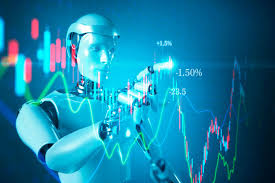
At some point in the not-so-distant future, robots will infiltrate every aspect of our lives, from office work and manufacturing to service work and trade skills, and even your home. Here are some numbers for you.
The real question I want to explore in today's post is what happens to the people who don't own the robots? Let's dig in.
I spent the past week reading through a detailed account of what's happening inside Figure's robotics facility in San Jose, and I want to be direct: the humanoid robots economy is no longer a thought experiment. Figure's latest robot ran for 67 consecutive hours of fully autonomous work, kitchen tasks, package handling, and logistics, without a single error. That's not a demo reel, that's a product. When you factor in a projected lease cost of roughly $10 a day, it's a product priced to replace the single largest input cost on every corporate income statement in America: human labor.
The optimists call what's coming the "age of abundance." Cheaper goods, freed-up time, robots building robots until supply constraints essentially disappear. That would be incredible, and you should not dismiss that vision. Furthermore, I think it's directionally correct over a long enough horizon. But after 35 years of watching economic cycles play out, I've learned that the gap between a macro promise and the lived experience of actual households is where the real story lives.
In an upcoming article, we will dig deeper into the problems plaguing the K-shaped economy. However, that bifurcated structure, in which higher-income households ascend while lower-income ones stagnate, was already a structural feature of American life before a single humanoid robot touched a factory floor. Back to our question, does the arrival of humanoid robots at scale fix that problem? Or, does it make it dramatically worse? The answer, I believe, is both, in that order, and separated by a decade of potential pain.
The Technology Of Robots Is Not Waiting For A Policy Response
It's worth taking the technology seriously before discussing the economics, because the economics are downstream of the hardware reality. Figure has replaced over 100,000 lines of handwritten control code with a single neural network — what they call Helix 2 — that controls the robot's entire body in real time. The key shift is that neural networks learn from data rather than explicit instructions. Once a robot masters a task, that knowledge propagates instantly across the entire fleet. Humans don't work that way. Robots do.
At $300 per month to lease, against a U.S. minimum wage that runs $15 to $20 per hour, a humanoid robot is already 50 times cheaper than the human it displaces, and it works around the clock without benefits, turnover, or OSHA violations. The corporate incentive to adopt is not subtle. JPMorgan's own disclosures describe AI-driven efficiency gains of 40% to 50% in certain operations. Add a physical labor layer to that, and you have the most powerful deflationary force for corporate margins in modern history.