










Breaking News
 Banks are closing down, cash is being removed, digital ID is being introduced, facial recognition...
 An All-American Retort to Israel's Invasion of Lebanon
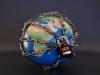 Energy Lockdowns and the New Era of Government Control
 Infowars Site Goes Offline Amid The Onion's Legal Battle to Secure Control of Right-Wing Outlet
Top Tech News
 Brain-inspired chip could reduce AI energy use by 70%
 CANCER HAS BEEN CURED
 "This is the first synthetic species," microbiologist J. Craig Venter told 60 Minutes'
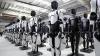 Humanoid robots are hitting the factories at an increasing pace
 Microsoft's $400 Billion Mistake Is Now a $200 Phone With Zero Tracking
 Turn Sand to Stone With Vinegar. Stronger Than Steel. Hidden Since 1627
 This is a bioprinter printing with living human cells in real time
 The remarkable initiative is called The Uncensored Library,...
 Researcher wins 1 bitcoin bounty for 'largest quantum attack' on underlying tech
 Interceptor-Drone Arms-Race Emerges


Energy Lockdowns and the New Era of Government Control
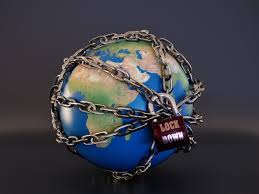
Doug Casey: We're looking at something much worse than another lockdown, as bad as that was. The big question is whether we're now in World War III. I think we are. The US has increased its military budget by 50%, and is pushing the Europeans to double their military spending. The war in the Ukraine is ongoing, and the Europeans want to ramp it up further. Nor do I think that the current focus of everybody's attention, the war between the US/Israel, and Iran, will end anytime soon. It's going to drag on for many months or even years. And if the Americans or Israelis push the Iranians too far—which is likely—the Iranians could respond with not just drone and missile attacks in the region, but with all-out cyber war. Since the world runs on computers, that could be as devastating as a nuclear war.
At the moment, the war is centered on destroying or disrupting energy in the Middle East. But it can't possibly stay there. That's because Asia, which is to say two-thirds of the world's population, is totally reliant on petrochemicals from the Persian Gulf. They can't remain passive observers as the war destroys their economies.
So the answer to the question is, yes, you should plan on severe energy shortages. We've already seen hints of this: four-day government workweeks, travel restrictions, remote schooling, scheduled power cuts, and flight cancellations. There's already fuel rationing in the Philippines, Sri Lanka, Bangladesh, Pakistan, and Vietnam. The US is shipping emergency gasoline and diesel to Australia, whose Green government idiotically has made it impossible for them to refine any themselves.
Napoleon once said, correctly, that in war the psychological is to the physical as three is to one. So if Western populations are propagandized enough, I suppose they can absorb an immense amount of damage. But they shouldn't be fighting the Iranians, the Chinese, or other largely imaginary enemies. The real malefactors in this scenario are Western leaders, especially in the U.S. Of course, most world leaders are sociopaths; I certainly don't support the mullahs. But at the moment, our leaders in the West are the most aggressive and virulent offenders.
International Man: If the Iran-U.S./Israeli war continues to disrupt the Strait of Hormuz, Asian economies will face a serious energy shock.
Do you think governments will use that crisis to impose temporary rationing measures, or are we looking at permanent energy controls and managed scarcity?