










Breaking News
 House Votes To Extend Surveillance Powers Until April 30
 US Chemists Turn Natural Gas Into Liquid Fuel Without High Heat And Pressures
 Critical Metals Shares Surge 40% After Expanding Rare Earth Mining Position In Greenland
How Many Scoundrels Like Swalwell in Washington DC?
Top Tech News
 Researchers Turn Car Battery Acid and Plastic Waste into Clean Hydrogen and New Plastic
 'Spin-flip' system pushes solar cell energy conversion efficiency past 100%
 A Startup Has Been Quietly Pitching Cloned Human Bodies to Transfer Your Brain Into
 DEYE 215kWh LiFePO4 + 125,000W Inverter + 200,000W MPPT = Run A Factory Offgrid!!
 China's Unitree Unveils Robot With "Human-Like Physique" That Can Outrun Most People
 This $200 Black Shaft Air Conditions Your Home For Free Forever -- Why Is It Banned in the U.S.?
 Engineers have developed a material capable of self-repairing more than 1,000 times,...
 They bypassed the eye entirely.
 The Most Dangerous Race on Earth Isn't Nuclear - It's Quantum.
 This Plasma Stove Cooks Hotter Than The Sun


House Votes To Extend Surveillance Powers Until April 30
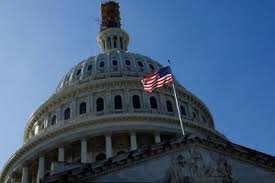
Friday's vote - via unanimous consent after a longer five-year reauthorization pushed by Republicns failed to advance - extends Section 702 until April 30.
The short-term measure now moves to the Senate, which faces a looming deadline: the current authorization expires April 20. The vote comes despite a well-documented history of FISA abuses spanning both individualized Title I warrants and the bulk warrantless collection under Section 702, as detailed in multiple Department of Justice Inspector General reports, declassified Foreign Intelligence Surveillance Court (FISC) opinions, and congressional oversight findings.
President Donald Trump had urged Republicans to support a clean extension, citing the law's critical role in national security while personally recounting what he described as "the worst and most illegal abuse of FISA in our Nation's History." Trump referenced the FBI's use of FISA during the Crossfire Hurricane investigation into his 2016 presidential campaign. At the same time, he stressed that the U.S. military "desperately needs" Section 702 to protect troops and diplomats, particularly amid ongoing operations against Iran's nuclear program.
"With the ongoing successful Military activities against the Terrorist Iranian Regime, it is more important than ever that we remain vigilant, PROTECT our Homeland, Troops, and Diplomats stationed abroad," Trump said. He added that generals he consulted called the authority "VITAL," especially in the current geopolitical climate.
Heaven forbid he demand reforms and more oversight.
Section 702 permits the government to collect communications of non-U.S. persons located outside the United States without a warrant. However, it inevitably captures "incidental" communications involving American citizens, who can then be searched in the database through so-called "backdoor" queries - often without a warrant or probable cause. Critics on both sides of the aisle have long warned that the program effectively enables warrantless domestic surveillance.
Long-Standing and Systemic Abuses
FISA was enacted in 1978 in direct response to revelations from the Church Committee about executive-branch spying on civil-rights leaders, anti-war activists, and political opponents. Yet official records show recurring compliance failures and misuse in the decades since.
The highest-profile case of targeted surveillance involved Carter Page, a former Trump campaign foreign-policy adviser. A December 2019 DOJ Inspector General report by Michael Horowitz identified 17 significant inaccuracies and omissions across four FISA warrant applications and renewals. These included heavy reliance on the unverified Steele dossier - funded by the Clinton campaign and DNC - without disclosing its political origins, lack of corroboration, or exculpatory evidence (such as Page's prior reporting as a CIA source). The FBI also failed to correct the record with the FISC.