










Breaking News
 Evacuations begin as 'blockbuster' nor'easter barrels toward millions in 12 US states
 Trump's military prepares for Cuba as leaked Pentagon memo sends telling signal...
 Ford v. Hyundai: Henry Ford Must Be Turning In His Grave After New Report
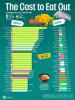 Switzerland Is Still The Most Expensive Place In The World To Eat Out
Top Tech News
 Tesla Model 3 killer charges from 10 to 97% in just 9 minutes
 World-first unpowered DNA computer sets speed record
 I Power 5 Buildings Off-Grid. Here's How
 The US government is pushing hard to get a working nuclear fission reactor into space by late 2028
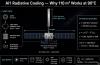 SpaceX Starmind AI in Space Radiator
 China Will Dominate Global Nuclear Energy Through 2035, Analyst Says
 These Absolutely Wild-Looking EVs Are Saudi Arabia's First Homegrown Cars
 BEYOND THE MOON: NASA plans a nuclear-powered fleet to push DEEPER into space
 Big Oil Backs Mazama's $135 Million Bet On Superhot Geothermal
 Quantum compass takes flight on Northrop's Lumberjack drone


Nearly Half of Cancer Patients Taking Ivermectin + Mebendazole...
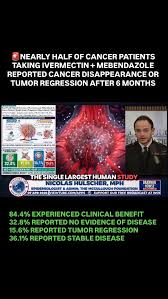
Epidemiologist Nicholas Hulscher reported that in the largest study of Ivermectin and Mebendazole anti-parasitic treatments, nearly half of the patients in the study reported a disappearance of the cancer or tumor regression. He wrote that 32.8% of the study participants showed no more evidence of disease after 6 months, 15.6% reported tumor regression and 36.1% reported that the disease had stabilized and was no longer spreading.
The clinical program evaluation included 197 cancer patients, with 122 completing a follow-up survey at about six months (61.9% response rate).
The cancer patients were prescribed compounded ivermectin–mebendazole, with each capsule containing 25 mg ivermectin and 250 mg mebendazole—most commonly taken at 1–2 capsules per day.
NOTE: The Need To Know News does not endorse any medical treatments, but instead reports the news. Please consult your own medical health experts before engaging in any medical treatments.
Report from epidemiologist Nicholas Hulscher:
????NEARLY HALF OF CANCER PATIENTS TAKING IVERMECTIN + MEBENDAZOLE REPORTED CANCER DISAPPEARANCE OR TUMOR REGRESSION AFTER 6 MONTHS
— Nicolas Hulscher, MPH (@NicHulscher) April 8, 2026
84.4% EXPERIENCED CLINICAL BENEFIT
32.8% REPORTED NO EVIDENCE OF DISEASE
15.6% REPORTED TUMOR REGRESSION
36.1% REPORTED STABLE DISEASE
Our study… https://t.co/QfY65HxQgM pic.twitter.com/n8eRPBa0ce