










Breaking News
 The Most Dangerous Pain Reliever Is Probably in Your Medicine Cabinet Right Now
 The Return of Leno's Law
 A Precedent Being Set
 As The Midterms Approach Here's The Conversation About Voting Rights No One Is Having
Top Tech News
 China Introduces Pistol-Like Coil-Gun Based On Electromagnetic-Launch Systems
 NEXT STOP: MARS IN JUST 30 DAYS?!
 Poland's researchers discovered a bacteria strain that destroys pancreatic cancer.
 Intel Partners with Tesla and SpaceX on Terafab
 Anthropic Number One AI in Ranking and Revenue - Making $30 Billion Per Year
 India's indigenous fast breeder reactor achieves critical stage: PM Modi
 Mexico Speeds Up Biometric ID Rollout
 Homemade solar drone smashes endurance record with 5+ hours aloft
 This Home Flywheel Makes Storing Solar 90% Cheaper -- And It Works Forever!
 Physicists captured a crystal made only of electrons, forming a honeycomb pattern without atoms...



A Precedent Being Set
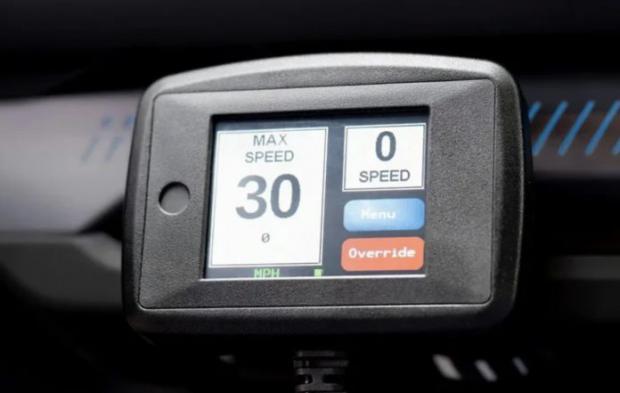
At least two states - Virginia and Illinois - are or soon will be enforcing speed limits via speed limiters attached to the cars of people who "speed." The latter word is bracketed within air fingers quote marks to deride the arbitrary yet vicious business of framing anyone who drives above a certain speed is deserving of punishment.
For "speeding."
Are people punished for running "too fast"? Well, why not? Isn't it possible that a person running too fast might run into someone else and knock them down? Wouldn't it be safer if they slowed down? You could even say that running – like "speeding" – "kills," since it could. Hyperbole? Certainly. But hyperbole doesn't obviate the point.
It just brings it into focus.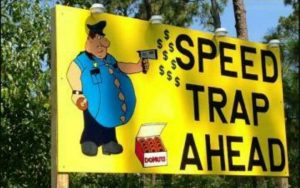
People are punished every day for doing nothing more than driving faster than a number on a sign says they're allowed to – and the worst thing is many people have accepted this with insouciance as just the way it is. That's true, of course – about it being just the way it is – but it doesn't mean it ought to be accepted with insouciance, because it is outrageous. An affront to both common sense and justice. Because there is no justice in punishing people for something that hasn't resulted in any harm to anyone and (in most of these cases of "speeding") could not even plausibly be argued stood a meaningful chance of causing harm. It is doubtful even one out of 100 "tickets" – as these extortion notes are styled – are handed out for driving 100 MPH through a school zone (the usual hyperbolic argument trotted out by defenders of speed limits).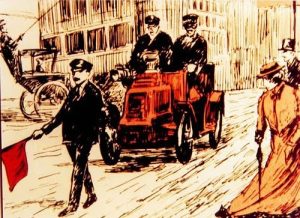
The majority of "tickets" handed out are for not crawling along at the preposterous speeds of 25, 35 or 45 MPH on secondary roads – as if it were 1920 and modern cars had Model T brakes. The 55 MPH National Maximum Speed Limit that held for 20 long years is perhaps the best (worst) example of this business of punishing people for driving faster than speed limits set so low as to assure almost every driver on the road is a "speeder."