










Breaking News
 U.S. intercepted Ukraine government messages discussing plot to route money to Biden re-election
 This Should NOT Be Happening in Oil Markets
 Unjust War Theory
 Once Again, a Crisis Raises the Question, Why Does the State Exist?
Top Tech News
 The Secret Spy Tech Inside Every Credit Card
 Red light therapy boosts retinal health in early macular degeneration
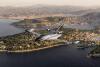 Hydrogen-powered business jet edges closer to certification
 This House Is 10 Feet Underground and Costs $0 to Cool. Why Is It Banned in 30 States?
 Cold Tolerant Lithium Battery?? Without Heaters!? Ecoworthy Cubix 100 Pro!
 DLR Tests Hydrogen Fuel for Aviation at -253°C
 Watch: China Claims Cyborg Breakthrough To Build An "Army Of Centaurs"
 Instant, real-time video AI is now upon us, for better and worse
 We Build and Test Microwave Blocking Panels - Invisible to Radar
 Man Successfully Designs mRNA Vaccine To Treat His Dog's Cancer



Iran war teaching Taiwan hard lessons about US resolve
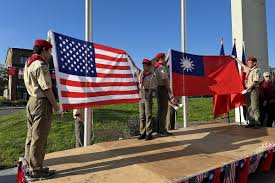
The United States and Israeli strikes on Iran have become increasingly concerning for the world due to the risks of further escalation and the impact on energy markets. In Taiwan, however, the focus has shifted in a different direction.
Rather than treating the war as geographically distant, Taiwanese political leaders and analysts are viewing it as a real-time indicator of how the US operates under strategic pressure.
The key question is less about whether the US would act if a conflict with China were to break out in the Indo-Pacific region, and more about how it would manage competing pressures if multiple crises unfolded at once.
A test of limits, not intentions
There is growing recognition in Taiwan that US resources are not unlimited.
The Middle East war has caused energy prices to fluctuate and stoked fears of rising inflation in the United States, demonstrating the domestic costs of military operations.
US President Donald Trump's approval ratings have also taken a hit, with some in his own party now questioning his rationale for going to war.
Some reports have indicated US supplies of interceptor missiles are running low. The US military has, for example, had to move some THAAD missile interceptors from South Korea to the Middle East. The US has also struggled to defend against Iran's use of asymmetrical fighting tactics.
This has direct implications for the deterrence Washington has long maintained in the Indo-Pacific. This deterrence depends not only on US war-fighting capability, but on the expectation this capability will remain intact under strain.
Conflicts elsewhere may not weaken the US resolve to intervene if China were to invade or pressure Taiwan in some fashion. But they can drain American resources and influence where these items are prioritised.
Shifting thresholds for the use of force
The US has also framed its strikes on Iran as a "preventive" action aimed at mitigating a future threat rather than responding to an imminent attack. This raises broader questions about the changing threshold for the use of force in the Indo-Pacific.