










Breaking News
 The AI Bird-Flu Scenario They Just Published
 Japan's first robot ambulance works the 9-1-1 lines for humanoids
 Cheap smartphone add-on pinpoints hidden cameras to shut down spies
 The $600 Tank That Beats a $10,000 Powerwall
Top Tech News
 Terrifying AI Behavior Even Its Creators Couldn't Explain
 WW3 Near-Miss? AI Hallucinated Nuclear Weapons Components Aboard Chinese Vessel Bound For Iran
 Stripe Is Building the Toll Road for the Machine Economy
 Toyota Dakar hopeful swaps twin-turbo V6 for hydrogen fuel cells
 4-min turbo-inflatable cubic camp castle is now available in the USA
 Researchers Used Claude To Hack OpenAI Employee Accounts
 Chinese Scientists Develop New Oil Refining Method That Cuts Energy Use by 90%
 World's smallest CT scanner fits in the palm of your hand
 The Tesla Roadster will blow people's minds
 Peter Thiel-Funded Company Anduril to Triple the Number of Autonomous Surveillance Towers...



Homestead Fuel Storage and Rotation, by NC Bluedog
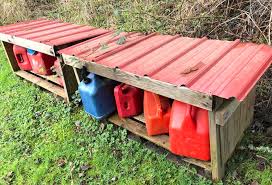
Editor's Note: This is a re-post of a SurvivalBlog article from May, 2008. Given the recent fuel price spikes and the many e-mails that I've recently received asking about fuel storage, I thought that it was apropos to dig up this practical article from the blog's early archives.
Given that liquid fuel costs are climbing dramatically, and likely to continue rising, I would like to share some of the practices for fuel storage we employ. For our homestead, liquid fuel equates to four items, namely: Propane, diesel fuel, kerosene and last but not least gasoline. For each fuel, there are specific uses, distinct storage requirements and longevity considerations. Let me discuss each in order:
The primary furnace in our house runs on propane. Currently, we use electricity for water heating and cooking. Our annual propane usage is between 500 to 800 gallons per year, depending on the weather and how much wood we burn in the small heating stove in the living room. My goal when we bought the house was to have one year of supply, so I had installed two 500-gallon (nominal water capacity) above-ground propane tanks (800-gallon capacity at 80% fill). I have the tanks filled during the (typical) summer price drop.
Below-grade tanks, while preferable for several reasons (ballistic protection etc.), are problematic (i.e. expensive) because of the rocky soil and high water table. Nonetheless, I would like to expand my capacity to two years, and will likely bear the excavation expense and install a 1000-gallon underground tank as well. For the grill and portable propane appliances (stove, lights etc.), we keep a supply of 20- and 40-pound tanks available. Small one-pound propane bottles are refilled from these tanks. (Note: US DOT regulations prohibit transporting refilled "disposable" cylinders). Storage life is not of concern with propane, but price and availability are of paramount importance.