










Breaking News
 Has A Global Catastrophe Been Averted, Or Is This Just A Very Temporary Reprieve?
 Blocking The Internet Archive Won't Stop AI, But It Will Erase The Web's Historical Record
 Here is why Nasdaq and owner of NYSE are putting the $126 trillion equity market on blockchain
 JFK: The Memo That Might Have Stopped Israel's War on Iran
Top Tech News
 We Build and Test Microwave Blocking Panels - Invisible to Radar
 Man Successfully Designs mRNA Vaccine To Treat His Dog's Cancer
 Watch: Humanoid robot gets surprisingly good at tennis
 Low-cost hypersonic rocket engine takes flight for US Air Force
 Your WiFi Can See You. Here's How.
 Decentralizing Defense: A $96 Guided Rocket Just Put Precision Warfare into the Hands of the People
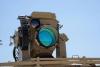 Israel's Iron Beam and the laser future of missile defense
 Scientists at the Harbin University of Science and Technology have pioneered a sophisticated...
 Researchers have developed a breakthrough "molecular jackhammer" technique...
 Human trials are underway for a drug that regrows human teeth in just 4 days.



Iran Ramps Up Threats as Tide Turns Against the IRGC
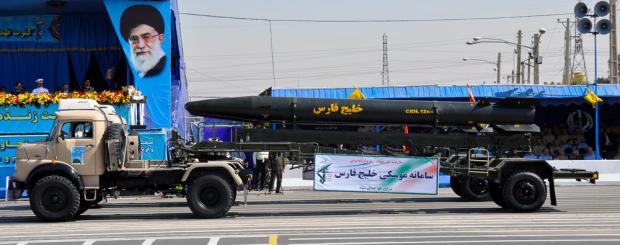
Colonel Ebrahim Zolfaqari, spokesman for Iran's Khatam al-Anbiya military command headquarters, warned that if Iran's fuel infrastructure is attacked, all energy, information technology systems, and desalination infrastructure used by America and its allies in the region will be struck.
Parliament Speaker Mohammad-Bagher Ghalibaf echoed the threat on X, warning that critical infrastructure, energy, and oil across the region will be irreversibly destroyed and oil prices will remain elevated for a prolonged period if Iran's power plants are struck. A UN official warned that Iran is poised to strike desalination plants across the region within days, which would trigger a water crisis affecting Gulf states and Israel.
The IRGC-affiliated Mehr news agency released a map showing power plants across the UAE, Saudi Arabia, Qatar, and Kuwait that could be targeted, with the message "Say goodbye to electricity!" IRGC-affiliated media also circulated a map marking Doha, including the headquarters of Al Jazeera, as a potential target, advising residents of the Qatari capital to evacuate.
Iran launched two ballistic missiles at the joint U.S.-UK base at Diego Garcia in the Indian Ocean, approximately 2,000 miles from Iran. Iranian Foreign Minister Araghchi warned Britain that any permission granted to the United States to use its bases for operations against Iran would be regarded as a direct act of aggression.
Some analysts see these threats as defiance, a sign that the IRGC refuses to surrender. Others view them as a desperate attempt to force a negotiated end to a war the IRGC cannot win, and the Islamic regime cannot survive.
Victor Davis Hanson, a senior fellow at the Hoover Institution and classicist and military historian at Stanford, has argued the tide has turned against Iran. He has written about how wars are won and lost, including in his book The Second World Wars, and has appeared on Fox News and The Daily Signal since Operation Epic Fury began. He has said Iran's leadership could fall within weeks if the military campaign continues uninterrupted.
Hanson's argument rests on reading the behavior of third parties rather than the claims of either side. In Europe, the E3, the United Kingdom, France, and Germany, resolved to support proportionate defensive military measures against drones and ballistic missiles, and British Prime Minister Keir Starmer said the United States can use British bases for defensive strikes on Iran. Hanson argues this signals that Europe has read the battlefield and aligned with the winning side.