










Breaking News
 Blocking The Internet Archive Won't Stop AI, But It Will Erase The Web's Historical Record
 Here is why Nasdaq and owner of NYSE are putting the $126 trillion equity market on blockchain
 JFK: The Memo That Might Have Stopped Israel's War on Iran
 I Traveled Through TSA Democrat Shutdown Chaos So You Don't Have To
Top Tech News
 We Build and Test Microwave Blocking Panels - Invisible to Radar
 Man Successfully Designs mRNA Vaccine To Treat His Dog's Cancer
 Watch: Humanoid robot gets surprisingly good at tennis
 Low-cost hypersonic rocket engine takes flight for US Air Force
 Your WiFi Can See You. Here's How.
 Decentralizing Defense: A $96 Guided Rocket Just Put Precision Warfare into the Hands of the People
 Israel's Iron Beam and the laser future of missile defense
 Scientists at the Harbin University of Science and Technology have pioneered a sophisticated...
 Researchers have developed a breakthrough "molecular jackhammer" technique...
 Human trials are underway for a drug that regrows human teeth in just 4 days.



Tesla And SpaceX To Build Massive "Terafab" Chip Factory In Austin
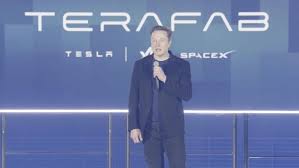
The plan is to start with a smaller, highly advanced fabrication facility capable of producing and testing a wide range of chips, before expanding to a larger operation.
Musk argues the semiconductor industry isn't scaling fast enough to meet his companies' growing demand for AI and robotics, so he sees building his own supply as necessary. His long-term goal is to support massive computing capacity—eventually reaching a terawatt annually—though he hasn't provided a timeline.
Yahoo writes that the project would likely sit near Tesla's Austin headquarters and could produce cutting-edge chips, potentially at the 2-nanometer level. One set of chips would power vehicles, robotaxis, and humanoid robots, while another, more powerful line would be designed for space-based computing used by SpaceX and xAI.
Despite widespread concern about chip shortages, it's unusual for companies to build their own fabs due to the enormous cost and complexity. Musk acknowledged existing suppliers can't fully meet Tesla's future needs as it shifts toward AI-driven products.
He also outlined broader ambitions, including space-based data centers powered by satellite networks. A prototype "mini" satellite could deliver about 100 kilowatts, with future versions reaching megawatt levels. These efforts are tied to SpaceX's planned IPO and larger vision of expanding computing infrastructure beyond Earth.
Overall, the Terafab project reflects Musk's push to vertically integrate chip production while supporting his longer-term goals in AI, robotics, and space technology.