










Breaking News
 Jake Paul - Trump interview: We cover the Iran war, immigration policies, the assassination...
 US Attorney Jeanine Pirro just announced activist Judge Boasberg has BLOCKED a Grand Jury...
 Cost of the Iran War--and Why It Will Fuel Inflation
 Senator Ted Cruz Says "Christ Is King" Means "I Hate The Jews" & Jews, Not Chris
Top Tech News
 Human Brain Cells Merge With Silica To Play DOOM
 Will Yann LeCun Provide The Next Breakthrough In AI?
 Human Brain Cells Merge With Silica To Play DOOM
 Solar And Storage Could Reshape Rural Electricity Markets
 With World Seemingly At War, DARPA Finds Time To Unveil The X-76
 Renewable Water From Air.
 The world's first diesel plug-in hybrid pickup truck is here
 US advances nuclear revival with approval of Natrium Gen IV reactor
 Your Contractor Doesn't Want Me To Show You This!
 CEO of Blacklisted AI Company Anthropic, Dario Amodei Says His AI Models 'May Have Gained...



Cost of the Iran War--and Why It Will Fuel Inflation
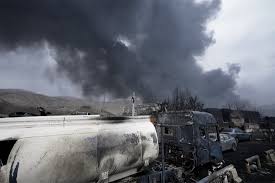
When a $35,000 Iranian drone can force the US or Israel to fire interceptors costing millions, what does that say about the economics of modern war, and who really benefits in a conflict defined by that kind of asymmetry?
Doug Casey: War has always been about economics. That's even truer today because of the huge discrepancy between what the First World can afford and what the Third World can. I believe Iran is using what Muhammad Ali called the rope-a-dope. You mostly just absorb your opponent's blows. He tires himself out, and then you counterattack. The Iranians' rope-a-dope is to let the US and Israel deplete their supplies of ultra-expensive missiles and interceptors before counterattacking in size.
The US is in the habit of building fantastically expensive, complicated weapons that were originally intended to confront peer adversaries like the Soviet Union or China. That can make sense when you consider that a US soldier costs about a million dollars, all in, to train and support. But a Third World teenager costs about nothing. Each of them is like an AI-directed cruise missile, but there are millions of them. It's the same equation with missiles and drones.
Wars like this, and this war in particular, might bring down the US through simple bankruptcy. Most Americans are unaware that Trump has already dropped bombs in 10 different countries just in the last year. It's expensive, and it makes enemies.
The US is no longer like G.I. Joe in World War II, passing out nylons and chocolates to make friends. The answer from the Third World will be "Two, three, many Vietnams", pinpricking the giant to death over decades. The US has been using ultra-expensive planes and missiles to blow up huts in the desert. It had to back off from fighting the Houthis, who aren't even a nation-state. The US approach to warfare is unseemly, stupid, uneconomic, and unsustainable. You might think that Trump would consider closing its 850 provocative foreign bases and concentrate on safeguarding the geographical US. But that's not how declining bankrupt empires are wired…
International Man: The Pentagon's preliminary estimate is that the war will cost roughly $1 billion per day, but some analysts say missile defense alone could be costing several billion daily.
How much higher do you think the real cost of a US-Iran war would be once you include indirect costs, delayed effects, stockpile depletion, and the broader economic distortions?
Doug Casey: To keep this in perspective, realize that World War II, which was an all-out fight for survival and lasted almost four years for the US, supposedly only cost $275 billion. Those were hard dollars, perhaps $4 trillion in today's currency. The comparison helps keep expenses in perspective. Now, nobody even knows the direct costs of wars. Forget about the indirect costs. It's said that the misadventure in Afghanistan cost $2.3 to $4 trillion, fighting against primitive people armed mostly with AK-47s. The Iraq War cost over $2 trillion. Neither adventure benefited the US in any way whatsoever that I can determine.