










Breaking News
 The AI Bird-Flu Scenario They Just Published
 Japan's first robot ambulance works the 9-1-1 lines for humanoids
 Cheap smartphone add-on pinpoints hidden cameras to shut down spies
 The $600 Tank That Beats a $10,000 Powerwall
Top Tech News
 Terrifying AI Behavior Even Its Creators Couldn't Explain
 WW3 Near-Miss? AI Hallucinated Nuclear Weapons Components Aboard Chinese Vessel Bound For Iran
 Stripe Is Building the Toll Road for the Machine Economy
 Toyota Dakar hopeful swaps twin-turbo V6 for hydrogen fuel cells
 4-min turbo-inflatable cubic camp castle is now available in the USA
 Researchers Used Claude To Hack OpenAI Employee Accounts
 Chinese Scientists Develop New Oil Refining Method That Cuts Energy Use by 90%
 World's smallest CT scanner fits in the palm of your hand
 The Tesla Roadster will blow people's minds
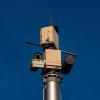 Peter Thiel-Funded Company Anduril to Triple the Number of Autonomous Surveillance Towers...



US advances nuclear revival with approval of Natrium Gen IV reactor
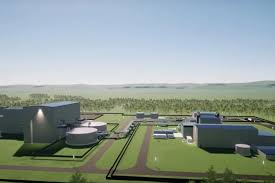
Once a global leader in nuclear power, the US created many of the Generation I and Generation II reactor designs on which much of today's nuclear fleet is based. However, in the 1970s there was a major shift in American civilian nuclear policy. Nuclear fuel reprocessing and fast breeder reactor programs were terminated, the environmental movement – broadly hostile to nuclear power – gained influence over federal policy, and the Three Mile Island accident in 1979 severely damaged public confidence in nuclear energy.
As a result, the Energy Reorganization Act of 1974 was passed, followed by the Kemeny Commission investigation after the Three Mile Island incident in 1979. Control of the US civilian nuclear program shifted from the Atomic Energy Commission to the newly formed Nuclear Regulatory Commission (NRC), whose mandate focused primarily on safety rather than the promotion of nuclear power development.
The combination of increasingly complex regulations, long approval timelines, high costs, and frequent legal challenges from activist groups dramatically slowed new nuclear projects.
As a result, no new reactors were built in the United States for decades, and the last new reactor application approval occurred roughly ten years ago.
Now, the US government is looking to revive the nuclear sector with a more streamlined regulatory process aimed at encouraging the construction of new plants while maintaining safety standards.
A key example is the Natrium Demonstration Project for Kemmerer Power Station Unit 1 in Kemmerer, Wyoming. The plant is being developed by US SFR Owner, LLC (USO), a special-purpose vehicle and wholly owned subsidiary of TerraPower. A participant in the US Department of Energy's Advanced Reactor Demonstration Program (ARDP), construction on the plant's non-nuclear civil engineering components has been underway since 2024. With the NRC's approval, work on the nuclear portions of the facility can now begin.
As a Generation IV reactor, Natrium is notable because it will be the first non-light-water reactor built in the United States since the 1980s. The project has also progressed at an unusually rapid pace for American nuclear development. The technical design review was completed in under 18 months, the formal application was accepted in May 2024, the safety evaluation was issued in December 2025, and the environmental impact statement was finalized in October.
However, approval for construction is only part of the process. Once the reactor is completed, the operator must still apply for a separate operating license before the plant can begin generating power.