










Breaking News
 Jake Paul – Trump interview: We cover the Iran war, immigration policies, the assassination...
 US Attorney Jeanine Pirro just announced activist Judge Boasberg has BLOCKED a Grand Jury...
 Cost of the Iran War--and Why It Will Fuel Inflation
 Senator Ted Cruz Says "Christ Is King" Means "I Hate The Jews" & Jews, Not Chris
Top Tech News
 Human Brain Cells Merge With Silica To Play DOOM
 Will Yann LeCun Provide The Next Breakthrough In AI?
 Human Brain Cells Merge With Silica To Play DOOM
 Solar And Storage Could Reshape Rural Electricity Markets
 With World Seemingly At War, DARPA Finds Time To Unveil The X-76
 Renewable Water From Air.
 The world's first diesel plug-in hybrid pickup truck is here
 US advances nuclear revival with approval of Natrium Gen IV reactor
 Your Contractor Doesn't Want Me To Show You This!
 CEO of Blacklisted AI Company Anthropic, Dario Amodei Says His AI Models 'May Have Gained...



The Famine Years: How Trump's Unnecessary War Has Put Global Food Security on the Brink
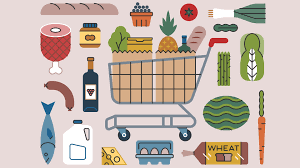
It is 2026, and I am watching with horror as President Donald Trump, sworn in last year, deliberately provokes a war that is set to starve millions across the globe. The choice to escalate strikes on Iran and enforce a blockade of the Strait of Hormuz is not a defensive necessity; it is an act of aggression that has severed the world's most critical artery of commerce. This closure, as one analysis starkly warns, is "the exposure of the entire global system" to cascading failure [1].
This is an engineered famine, a political crime masquerading as military strategy. We have seen this pattern before, where hunger is weaponized to control populations and amass wealth [2]. The grim reality of Gaza, where starvation is not a natural disaster but a result of political violence, serves as a chilling preview [3]. Now, under Trump's leadership, that model is being scaled to a global catastrophe. The hunger we will all feel is the famine he deserves, and it is already unfolding.
The Chokehold: How a Closed Strait Strangles Global Energy and Industry
The Strait of Hormuz is a narrow, 30-mile-wide passage, yet it carries an extraordinary proportion of the world's energy and fertilizer shipments [4]. Its closure has paralyzed global LNG shipping, trapping critical energy supplies. This isn't merely a story of rising fuel prices at the pump; it is about the energy that powers the entire chain of global food production, from processing to distribution.
The domino effect is immediate and severe. A zero-flow closure means zero spot sulfur available on the global market, crippling the production of sulfuric acid essential for industrial processes and agriculture [5]. As Craig Tindale's analysis details, this interruption "can propagate outward into a general crisis of civilization" [1]. The machinery of our modern world, built on efficiency and dependence, is now grinding to a halt. The chokehold applied by this blockade strangles not just oil, but the very lifeblood of industrialized farming.
First Domino: From Fishing Fleets to Empty Shelves
The cascading collapse is not a future prediction; it is present-day reality. Critical industries are already failing. Consider global seafood supply: major fishing fleets, dependent on fuel and supplies transported through these maritime corridors, are being paralyzed. In Thailand, an estimated half of its 9,000 fishing boats are being moored, with fishing operations halted due to rising fuel costs. Any major disruption to energy shipments cripples mobility and operations.
This is a supply chain fracture happening in real time. As NaturalNews reported, the Suez Canal -- another vital corridor -- has seen traffic drop by 50% due to geopolitical tensions and Red Sea attacks, disrupting global supply chains and threatening economic stability [6]. When one chokepoint closes, strain multiplies across others. The empty shelves many experienced during past supply chain issues are a mild preview of what's coming [7]. Now, with the Strait of Hormuz closed, the pace of collapse will accelerate, moving from fishing fleets to grocery stores with terrifying speed.