










Breaking News
 The US Military Is Involved In A Massive Mobilization Of Infantry Troops To Launch A FULL SCALE...
 Iran Is Not My Enemy
 Scientists reveal controversial plan to launch 50,000 MIRRORS into space for 'sunlight on demand
 Controversial geoengineering project sees scientists pump 65,000 litres of chemicals into...
Top Tech News
 The Pentagon is looking for the SpaceX of the ocean.
 Major milestone by 3D printing an artificial cornea using a specialized "bioink"...
 Scientists at Rice University have developed an exciting new two-dimensional carbon material...
 Footage recorded by hashtag#Meta's AI smart glasses is sent to offshore contractors...
 ELON MUSK: "With something like Neuralink… we effectively become maybe one with the AI."
 DARPA Launches New Program Generative Optogenetics, GO,...
 Anthropic Outpaces OpenAI Revenue 10X, Pentagon vs. Dario, Agents Rent Humans | #234
 Ordering a Tiny House from China, what's the real COST?
 New video may offer glimpse of secret F-47 fighter
 Donut Lab's Solid-State Battery Charges Fast. But Experts Still Have Questions



The Life of Frédéric Bastiat
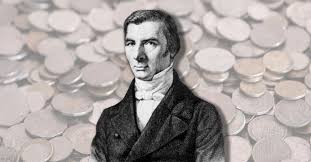
Two hundred and fifty years ago this month, the Scottish philosopher and economist Adam Smith's monumental work, An Inquiry Into the Nature and Causes of the Wealth of Nations, was published. Its lasting impact means that it belongs on any list of the 100 most influential books ever written.
Great teachers produce great students. Smith produced too many to count, but one in particular stands out as extraordinary for his eloquence, his storytelling, and his passion for freedom and free markets. That would be Frédéric Bastiat, best known for his last of many books, The Law. It is in that mesmerizing little volume, readable in an evening, that he declared: "No legal plunder! This is the principle of justice, peace, order, stability, harmony, and logic. Until the day of my death, I shall proclaim this principle with all the force of my lungs!"
It was also in The Law that Bastiat enunciated this vital concept: "Life, liberty, and property do not exist because men have made laws. On the contrary, it was the fact that life, liberty, and property existed beforehand that caused men to make laws in the first place."
At the Foundation for Economic Education, we possess a special affinity for Frédéric Bastiat. When his work was largely forgotten in France and unknown in America, it was FEE staffer Dean Russell who dusted him off, translated his books, and introduced him to an English-speaking audience a full century after his death in 1850. In addition to The Law and Dean Russell's biography of him (see sources, below), FEE also published Bastiat's Economic Sophisms and Economic Harmonies.
Bastiat never sat in any of Adam Smith's classrooms. He was born in Bayonne, France, on June 30, 1801, more than a decade after Smith passed away. Bastiat was a student of Smith in the intellectual sense. He identified the Scot as one of the three main influences over his own thinking, along with the French economist Jean-Baptiste Say, the school of Enlightenment thinkers known as the Physiocrats, and the French liberal Charles Dunoyer.
Say is remembered primarily for "Say's Law" (often explained as "supply creates its own demand"). When Bastiat founded a newspaper, Le Libre-Echange (Free Trade) in 1846, he printed a version of Say's Law on the masthead of every edition. The Physiocrats, though they erred in over-emphasizing agriculture, were early proponents of the natural law and market forces that Smith synthesized into his concept of "the invisible hand."
Bastiat's father died when the youngster was only seven. His mother passed away two years later. At the age of nine, he went to live with his paternal grandfather. The family's history of success in the export and banking businesses meant that young Frédéric could enroll in good schools, where he learned to speak Spanish, Italian, and English.
When he was 26 (in 1827), he stumbled across a copy of Benjamin Franklin's Poor Richard's Almanack, which he regarded as "a real treasure" because of Franklin's use of humor and brevity to illuminate serious principles.