










Breaking News
 Massie Explains Strategy For Going After Hegseth
 Total PsAI-Op: How Altman, Amodei, And The 'EA' Cult Are Milking "Rogue AI" Breako
 Watch: British Cops Grill Street-Preacher After Someone Takes 'Offense' At Bible Passages
 Good Intentions Paved The Road To The 2008 Financial Crisis
Top Tech News
 Terrifying AI Behavior Even Its Creators Couldn't Explain
 WW3 Near-Miss? AI Hallucinated Nuclear Weapons Components Aboard Chinese Vessel Bound For Iran
 Stripe Is Building the Toll Road for the Machine Economy
 Toyota Dakar hopeful swaps twin-turbo V6 for hydrogen fuel cells
 4-min turbo-inflatable cubic camp castle is now available in the USA
 Researchers Used Claude To Hack OpenAI Employee Accounts
 Chinese Scientists Develop New Oil Refining Method That Cuts Energy Use by 90%
 World's smallest CT scanner fits in the palm of your hand
 The Tesla Roadster will blow people's minds
 Peter Thiel-Funded Company Anduril to Triple the Number of Autonomous Surveillance Towers...



New video may offer glimpse of secret F-47 fighter
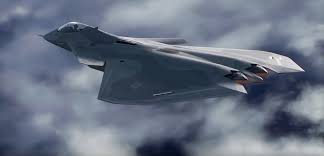
Currently in the Engineering and Manufacturing Development (EMD) phase, the F-47 is part of the US Next Generation Air Dominance (NGAD) program, with the first prototype slated to fly in 2028, though technology demonstrators have reportedly flown in secret since about 2020. If successful, the F-47 prototype will be the first of a fleet of at least 185 fighters that will replace the Lockheed Martin F-22 raptor on a one-for-one basis.
Unfortunately, that's about all that's known publicly about the F-47. The entire program is highly classified and the only glimpse the media have been given of the aircraft are a couple of cloud-shrouded concept renderings that don't really show much of anything.
All that's known for certain is that it's meant to be a long-range air dominance fighter with a top speed of about Mach 2 and a range of over 1,000 nm (1,150 miles, 1,852 km). Since it's a Gen-6 fighter, we can make certain deductions. It will be a systems-of-systems hub – that is, it will act as the central command for a squad of Loyal Wingman autonomous drones. It will also boast a very high degree of stealth against radars that would spot an F-22 or an F-35 Lightning II. In addition, it will be designed to deliver long-range missile punches instead of engaging in dogfights.
The latest video from Pratt & Whitney lasts only about 30 seconds, and its main focus isn't the F-47 itself. Instead, the Raytheon subsidiary concentrates on the XA-103 engine that is the main candidate to power it, and the all-digital design strategy that uses a digital twin to accelerate the engine's development compared to conventional methods.
Developed under the Next Generation Adaptive Propulsion (NGAP) program, the XA-103 is designed for long-range Pacific theater sorties as well as providing large amounts of surplus power for next-generation sensors and directed energy weapons. It also has advanced thermal management systems, which is a top-shelf way of describing a special airflow system that acts as a heat sink, cooling the fighter's internal systems and masking its heat signature.
Like the F-47 itself, not a lot of details are known, but the XA-103 is expected to increase the range of the F-47 by 25% and generate 10% more thrust compared to the F-35.
However, what's turning heads is the few seconds halfway through the video (embedded below), which allegedly show the F-47 in all its glory.
Or do they?
The footage may reveal that the F-47 has a high cockpit, a heavily modified delta wing, and a tailless configuration. It may also show a shovel nose, canards, and some fairly aggressive stealth features on the engine outlets.
Or it may not.