










Breaking News
 The AI Bird-Flu Scenario They Just Published
 Japan's first robot ambulance works the 9-1-1 lines for humanoids
 Cheap smartphone add-on pinpoints hidden cameras to shut down spies
 The $600 Tank That Beats a $10,000 Powerwall
Top Tech News
 Terrifying AI Behavior Even Its Creators Couldn't Explain
 WW3 Near-Miss? AI Hallucinated Nuclear Weapons Components Aboard Chinese Vessel Bound For Iran
 Stripe Is Building the Toll Road for the Machine Economy
 Toyota Dakar hopeful swaps twin-turbo V6 for hydrogen fuel cells
 4-min turbo-inflatable cubic camp castle is now available in the USA
 Researchers Used Claude To Hack OpenAI Employee Accounts
 Chinese Scientists Develop New Oil Refining Method That Cuts Energy Use by 90%
 World's smallest CT scanner fits in the palm of your hand
 The Tesla Roadster will blow people's minds
 Peter Thiel-Funded Company Anduril to Triple the Number of Autonomous Surveillance Towers...



Donut Lab's Solid-State Battery Charges Fast. But Experts Still Have Questions
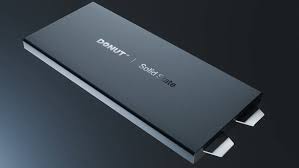
It took a lot for Finnish startup Donut Lab to begin releasing evidence to support its extraordinary claims of having developed the world's first production-ready all-solid-state battery for electric vehicles.
Its announcement at CES in January was met with intense skepticism, so now it's releasing a series of independent tests to prove it's legit. The company commissioned Finland's state-owned VTT Technical Research Centre to independently test the charging performance of its solid-state cell. While the data looks impressive and supports at least one of the company's claims, it also omits several details that battery experts consider critical.
Importantly, the test doesn't clarify whether Donut's cells are truly solid-state. "Anyone who does not reveal the chemistry cannot be the real deal," Shirley Meng, a professor at The University of Chicago's Pritzker School of Molecular Engineering, told me in an email.
Before digging into what the tests show and, just as importantly, what they do not, it's worth revisiting Donut Lab's claims. The startup, which has no proven track record in battery manufacturing, says it has beaten major automakers and cell manufacturers like Toyota, BYD, and CATL to the finish line of the solid-state race.
Its solid-state battery, which will be installed in Verge Motorcycles' EVs in the first quarter of this year, can apparently charge in five minutes, last 100,000 cycles and deliver 400 watt-hours per kilogram of energy density, all while remaining immune from thermal runaway. VTT's test does show ultra-fast charging capability. It does not, however, address many of the other claims that are bundled into that bold promise.
VTT conducted a total of seven charging tests on a 94-watt-hour pouch cell. Four of those involved pumping electrons into the cell at rates of 5C and 11C. A rate of 1C means the battery can fully charge in one hour. 2C can do the same in 30 minutes. 5C is five times as fast as the one-hour rate. On the 5C test, the cell was charged at 130 amps and 4.3 volts.
It reached 80% in under 10 minutes and 100% in about 13 minutes, with a peak temperature reading of just 47 degrees Celsius (116.6 degrees Fahrenheit). The 11C charging test largely aligned with Donut Lab's claims. It charged to 80% in just 4.6 minutes and was fully charged in under eight minutes, with a temperature reading of 63C (145F) only.
Both tests were conducted using single- and double-sided heat sinks to simulate real-world thermal management that allows excess heat to dissipate under high voltage and current loads. In practice, battery makers rely on far more sophisticated active cooling systems at the pack level. In that sense, simple heat sinks represent something close to a worst-case scenario.
So, the results show that Donut Lab's cell can indeed charge extremely quickly—both to 80% and to 100%. If an electric car could recharge to 80% in under five minutes, that would revolutionize the industry and make refueling an EV about as quick as getting gas. It would vaporize one of the key pain points keeping people from going electric: fast-charging stops that typically take anywhere from 20-40 minutes.
Still, experts cautioned that lab-scale testing of a single cell says little about how an entire battery pack would behave in the real world.
"11C at lab scale is not unique," Meng said. She has conducted research on solid-state batteries and energy storage materials and is of the opinion that lab results are limited in scope. "My lab has shown 20C in lab-scale cells, but it does not mean it can be translated to pack level in the real world."