










Breaking News
 Going the Way of the Denarius
 US Lawmakers Shmooze with Zelensky at Munich Security Conference...
 Scientists have plan to save the world by chopping down boreal forest...
 New Coalition Aims To Ban Vaccine Mandates Across US
Top Tech News
 New Spray-on Powder Instantly Seals Life-Threatening Wounds in Battle or During Disasters
 AI-enhanced stethoscope excels at listening to our hearts
 Flame-treated sunscreen keeps the zinc but cuts the smeary white look
 Display hub adds three more screens powered through single USB port
 We Finally Know How Fast The Tesla Semi Will Charge: Very, Very Fast
 Drone-launching underwater drone hitches a ride on ship and sub hulls
 Humanoid Robots Get "Brains" As Dual-Use Fears Mount
 SpaceX Authorized to Increase High Speed Internet Download Speeds 5X Through 2026
 Space AI is the Key to the Technological Singularity
 Velocitor X-1 eVTOL could be beating the traffic in just a year



Government's Business Plan Is Predation
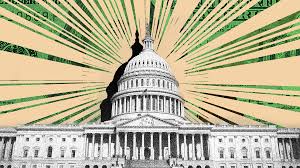
We know this at the outset because government does not compete in the market for our money as every other business must do. With a monopoly of violence, it seizes the money it wants through taxes and monetary inflation, and as long as government doesn't get carried away by taxing and inflating too much, most people—many of whom call themselves libertarians—regard this setup as necessary.
In America Loves Paying Taxes, Vanessa Williamson writes for The Atlantic:
In national surveys, over 95 percent of Americans agree with the statement, "It is every Americans' civic duty to pay their fair share of taxes," and more than half see taxpaying as "very patriotic." One man from Ohio called it a responsibility to "the Founding Fathers." A former Marine said taxpaying is "the cost of being an American," while a man from California said tax avoidance is the equivalent of "shorting the country."
Comforting, isn't it?
Every business, if it is to stay afloat, must produce a profit. It must make more money than it spends. Competition will force companies to keep their prices as low as possible while still bringing in enough revenue to make a profit. Without a sound business plan that adjusts to challenges from competition and changing consumer preferences, a firm's existence will be short-lived.
Consider the once-strong demand for Microsoft Disk Operating System (MS-DOS) personal computer applications in the early 1980s (I had a side business writing them). When the Macintosh came along in 1984 with its graphical user interface, Microsoft was caught flat-footed. Users no longer had to type cryptic commands they couldn't remember at a blinking cursor; they could do everything they wanted with a mouse and pull-down menus. The Mac was the computer "for the rest of us." Bill Gates immediately ordered the creation of a DOS shell that he called Interface Manager, later changed to Windows. It lacked the elegance of the Mac, but it sustained the company's leadership until they created a Windows operating system from scratch.
Apple helped Gates by failing to include a killer business app with their radical offering. Critics said the little Mac couldn't do anything except paint pretty pictures. At a price of $2,495.00 ($7,810.43 in 2026), it sold poorly. Later, after Steve Jobs returned to Apple after being dismissed by the board, he decided to empower individual users rather than hidebound organizations and developed a successful marketing strategy with the lowercase "i" and colorful, more powerful home computers.
Assuming he's allowed to vote freely with his money, the consumer always benefits from innovation and competition. Companies gathering the most votes stay around and possibly grow but are always subject to the changing preferences of the ones putting their money down.