










Breaking News
 The AI Bird-Flu Scenario They Just Published
 Japan's first robot ambulance works the 9-1-1 lines for humanoids
 Cheap smartphone add-on pinpoints hidden cameras to shut down spies
 The $600 Tank That Beats a $10,000 Powerwall
Top Tech News
 BEYOND THE MOON: NASA plans a nuclear-powered fleet to push DEEPER into space
 Big Oil Backs Mazama's $135 Million Bet On Superhot Geothermal
 Quantum compass takes flight on Northrop's Lumberjack drone
 Terrifying AI Behavior Even Its Creators Couldn't Explain
 WW3 Near-Miss? AI Hallucinated Nuclear Weapons Components Aboard Chinese Vessel Bound For Iran
 Stripe Is Building the Toll Road for the Machine Economy
 Toyota Dakar hopeful swaps twin-turbo V6 for hydrogen fuel cells
 4-min turbo-inflatable cubic camp castle is now available in the USA
 Researchers Used Claude To Hack OpenAI Employee Accounts
 Chinese Scientists Develop New Oil Refining Method That Cuts Energy Use by 90%



Experimental molecule may be a potent weapon against Alzheimer's
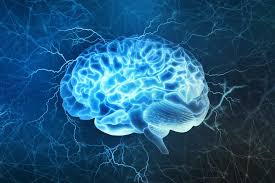
According to Alzheimer's Disease International, about 55 million people around the world were living with dementia in 2020, with 10 million new cases each year, meaning a new one arising about every three seconds. The disease's economic impact is massive – about $US818 billion in 2015, and about $1.3 trillion today.
But the personal cost is beyond any economic price.
Seeing one's spouse of decades, or one's siblings or parents of a lifetime lose contact with all their yesterdays and even their todays, slowly being stripped of reason, self-control, personality, and even the ability to take care of basic physical needs, is a massive burden that disproportionately falls on the shoulders of women as caregivers, and which yields the "reward" of depression and anxiety. In other words, Alzheimer's profoundly wounds not just the diagnosed individuals, but their families.
That's why a new study from Northwestern University offers so much hope, because if researchers there are correct, their new small-molecule NU-9 drug may be able to stop Alzheimer's disease long before it begins ruining lives.
"Alzheimer's disease begins decades before its symptoms appear," says Daniel Kranz, lead author of a paper that was recently published in Alzheimer's and Dementia: The Journal of the Alzheimer's Association. Long before diagnosis or even suspicion of the disease's manifestation, Kranz says toxic amyloid beta oligomers have begun "accumulating inside neurons and glial cells becoming reactive long before memory loss is apparent."
That long period in which Alzheimer's disease is performing silent neurological sabotage in which "the underlying pathology is already advanced," means that clinical trials likely fail because for most patients "they start far too late," says Kranz, a recent PhD graduate in Interdisciplinary Biological Sciences at Northwestern's Weinberg College of Arts and Sciences. "In our study," he says, "we administered NU-9 before symptom onset, modeling this early, pre-symptomatic window."
About 15 years ago, key co-author Richard Silverman (who is also the Patrick G. Ryan/Aon Professor in Weinberg's Department of Chemistry) invented the drug after having already invented pregabalin (Lyrica) to treat fibromyalgia, nerve pain, and epilepsy. With Kranz and corresponding author William Klein (an Alzheimer's disease expert and a professor of neurobiology at Weinberg), Silverman and colleagues worked for years to find or create a small molecule to prevent the aggregation of neurodegenerative proteins.