










Breaking News
 The AI Bird-Flu Scenario They Just Published
 Japan's first robot ambulance works the 9-1-1 lines for humanoids
 Cheap smartphone add-on pinpoints hidden cameras to shut down spies
 The $600 Tank That Beats a $10,000 Powerwall
Top Tech News
 BEYOND THE MOON: NASA plans a nuclear-powered fleet to push DEEPER into space
 Big Oil Backs Mazama's $135 Million Bet On Superhot Geothermal
 Quantum compass takes flight on Northrop's Lumberjack drone
 Terrifying AI Behavior Even Its Creators Couldn't Explain
 WW3 Near-Miss? AI Hallucinated Nuclear Weapons Components Aboard Chinese Vessel Bound For Iran
 Stripe Is Building the Toll Road for the Machine Economy
 Toyota Dakar hopeful swaps twin-turbo V6 for hydrogen fuel cells
 4-min turbo-inflatable cubic camp castle is now available in the USA
 Researchers Used Claude To Hack OpenAI Employee Accounts
 Chinese Scientists Develop New Oil Refining Method That Cuts Energy Use by 90%



Nano-magnets may defeat bone cancer and help you heal
It turns out that Magneto really should have studied oncology, because if he had, he might have learned that magnetism could be an ultimate weapon against cancer. And then, instead of waging war on humanity, all nations would bow before him, the trillionaire controlling the medical establishment (that is, a different sort of supervillain).
That's probably not what a team of researchers from Brazil and Portugal were thinking when they harnessed magnetic nanomaterials to find a way to stop bone cancer and heal the body in its wake, but it still holds.
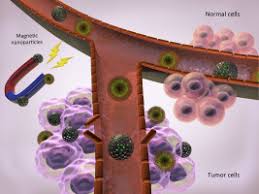
ngela Andrade, corresponding author of the Magnetic Medicine paper "Magnetic core-shell nanocomposites with bioactive glass coatings for hyperthermia-assisted bone cancer therapy," explains how magnetic bioactive nanocomposites offer so much promise in defeating bone cancer. They simultaneously eliminate tumors through magnetic hyperthermia – essentially, burning cancer cells from the inside – while supporting new bone growth. Using this method allows "high magnetization of the nanocomposite and a strong bioactivity in the same material, which has been a long-standing challenge in this field."
How does the process work? Andrade and her team synthesized and coated iron oxide magnetic nanoparticles with bioactive glass. During exposure to simulated bodily fluids, these magnetic bioactive nanocomposites quickly formed a group of phosphate minerals called apatites which are similar to the nonorganic material in bone, allowing them easy integration into bone.
"Among the tested formulations," says Dr. Andrade, from the Department of Chemistry at the Universidade Federal de Ouro Preto (UFOP) in Brazil, "the one with a higher calcium content demonstrated the fastest mineralization rate and the strongest magnetic response, making it an ideal candidate for biomedical applications."
Because the bioactive nanocomposites are magnetic, oncologists can employ magnetic hyperthermia – that is, the application of an alternating magnetic field to heat the particles inside cancer cells and destroy them. Because the nanoparticles don't enter healthy cells, those cells remain unharmed. Then, thanks to their bioactive glass coating, the particles help regenerate tissue. In the fight against bone cancer, they're not simply search-and-destroy, but search, destroy, and repair.