










Breaking News
 Trump, Treason, and the New York Times
 Democrat idiocy at work in San Francisco
 BREAKING THROUGH Tesla AI in 2026
Who Was The Biggest Antisemite In 2025?
Top Tech News
 Laser weapons go mobile on US Army small vehicles
 EngineAI T800: Born to Disrupt! #EngineAI #robotics #newtechnology #newproduct
 This Silicon Anode Breakthrough Could Mark A Turning Point For EV Batteries [Update]
 Travel gadget promises to dry and iron your clothes – totally hands-free
 Perfect Aircrete, Kitchen Ingredients.
 Futuristic pixel-raising display lets you feel what's onscreen
 Cutting-Edge Facility Generates Pure Water and Hydrogen Fuel from Seawater for Mere Pennies
 This tiny dev board is packed with features for ambitious makers
 Scientists Discover Gel to Regrow Tooth Enamel
 Vitamin C and Dandelion Root Killing Cancer Cells -- as Former CDC Director Calls for COVID-19...



Putin residence attack jeopardizes US security guarantees
Vladimir Putin's residence in Novgorod, known as Dolgiye Borody, also known as Valdai and Uzhin, was attacked by waves of drones on December 29.
We know this from an official statement from Sergey Lavrov, and from President Trump who was informed by Putin himself in a telephone call. The Russian Defense Ministry subsequently also released a report after a Duma deputy provided preliminary details of the attack.
The attack raises major questions about proposed US security guarantees for Ukraine as part of some sort of deal on settling the Ukraine war.
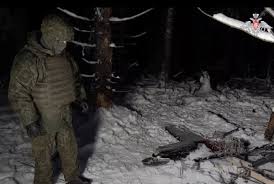
The Ukrainians said the attack never happened and much of the Western press reflected Ukraine's position. Now hard evidence is emerging that the Russian claims have merit.
According to official Russian statements and details circulated by state-aligned channels (similar to the reporting of Duma Deputy Alexander Khinshtein), the drones were reportedly intercepted at the following locations in the Novgorod Region: the Lake Valdai area around Dolgiye Borody; Yashcherovo, the intercept point west of the residence; Roschino, a forested area near the village where debris has been found; and Valday town where debris is said to have fallen.
The main attack drone used by Ukraine was the UJ-26 Beaver (Bober). This loitering munition has a distinctive canard layout with sleek fuselage and inverted tail. The type was introduced in 2023 and has reportedly entered mass production.
Range is in the order of 1,000 kilometers (620 miles) and payload is reported as 20 kilograms (44 lbs). This type was previously used to attack Moscow and other targets in Russia.
The Russians also claim to have found a crashed modified Chaklun long range strike drone. This drone is manufactured in Ukraine and is powered by a DLE111 Chinese-made engine. One of these drones in January, 2025 struck a Smolensk aviation plant that was remodeling older Su-25 aircraft.
The Russians have released a map showing the flight paths of the Ukrainian UAVs and information on the attack.
According to the Russian Ministry of Defense report, Russian air defenses shot down 49 drones above the Bryansk Region, one above Smolensk Region and another 41 above the Novgorod Region as they approached Putin's residence.
The Dolgiye Borody residence is surrounded by air defenses, some of them mounted on towers above the surrounding forest trees. There are at least 12 improved versions of the Pantsir S1 in the area, which have been optimized for anti-drone warfare.
Nearby there also is an S-400 air defense installation. In addition the region is blanketed by heavy electronic warfare units, among them jammers and spoofers including the Krasukha-4 and Pole-21E, an electronic RF jammer. These systems are designed to jam GPS signals and disrupt the communication links between drones and their operators.