










Breaking News
 BREAKING EXCLUSIVE: "This Wasn't Panic Buying Or Selling- IT WAS THEFT!"
 Somali Fraud is Miniscule Compared to Federal Reserve FRAUD
 Candace Owens Admits That Nevada Congressman Amodei Was Not Present...
 2025: The Year the Government Stopped Pretending It Cared About Freedom
Top Tech News
 Laser weapons go mobile on US Army small vehicles
 EngineAI T800: Born to Disrupt! #EngineAI #robotics #newtechnology #newproduct
 This Silicon Anode Breakthrough Could Mark A Turning Point For EV Batteries [Update]
 Travel gadget promises to dry and iron your clothes – totally hands-free
 Perfect Aircrete, Kitchen Ingredients.
 Futuristic pixel-raising display lets you feel what's onscreen
 Cutting-Edge Facility Generates Pure Water and Hydrogen Fuel from Seawater for Mere Pennies
 This tiny dev board is packed with features for ambitious makers
 Scientists Discover Gel to Regrow Tooth Enamel
 Vitamin C and Dandelion Root Killing Cancer Cells -- as Former CDC Director Calls for COVID-19...



Laser weapons go mobile on US Army small vehicles
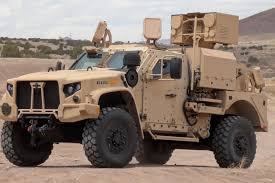
Laser weapons seem to be popping up everywhere these days but, despite their increasing effectiveness, they share one drawback in common. The high-powered systems tend to be rather bulky and heavy and look more like a shipping container than something out of Star Wars.
That's changing as smaller, more powerful, more rugged lasers move from the laboratory to the field. A significant milestone in this trend is the LOCUST laser, the second increment of which has been delivered to the US Army and reflects the military's shift from fixed-site directed energy weapons to mobile, maneuverable platforms that can defend frontline assets against drones and similar threats.
Beginning life as the Palletized-High Energy Laser (P-HEL) and evolving into the LOCUST, also called the AMP-HEL, the system's first increment was installed in a General Motors Defense Infantry Squad Vehicle (ISV) in September 2025. Increment 2 shares the same power output as Increment 1, but is more practical thanks to higher protection, onboard power support, lighter weight, and an upgraded beam aperture with improved focus, beam quality, and lethality over longer distances. Exactly how long is classified, though it's at least several kilometers.
It can power up in only 15 minutes and has a modular, open architecture for ease of maintenance. However, one major improvement is the Target Acquisition and Tracking System (TATS) gimbal that can turn 360° at a rate of 100° per second. It's claimed to be ultra stable and the whole system can be operated by a single person using a standard Xbox gaming controller.
"Directed energy is no longer a future concept – it is a proven force-protection capability," said John Garrity, Vice President ofAeroVironment's Directed Energy business unit. "Since deployed, LOCUST-equipped P-HEL systems have actively protected warfighters, allies, and critical infrastructure against aerial threats. With LOCUST's target acquisition, tracking and precision beam control, warfighters have an easy-to-use, reliable, trusted, and proven solution against the very real and evolving threats of modern warfare."