










Breaking News
 The AI Bird-Flu Scenario They Just Published
 Japan's first robot ambulance works the 9-1-1 lines for humanoids
 Cheap smartphone add-on pinpoints hidden cameras to shut down spies
 The $600 Tank That Beats a $10,000 Powerwall
Top Tech News
 BEYOND THE MOON: NASA plans a nuclear-powered fleet to push DEEPER into space
 Big Oil Backs Mazama's $135 Million Bet On Superhot Geothermal
 Quantum compass takes flight on Northrop's Lumberjack drone
 Terrifying AI Behavior Even Its Creators Couldn't Explain
 WW3 Near-Miss? AI Hallucinated Nuclear Weapons Components Aboard Chinese Vessel Bound For Iran
 Stripe Is Building the Toll Road for the Machine Economy
 Toyota Dakar hopeful swaps twin-turbo V6 for hydrogen fuel cells
 4-min turbo-inflatable cubic camp castle is now available in the USA
 Researchers Used Claude To Hack OpenAI Employee Accounts
 Chinese Scientists Develop New Oil Refining Method That Cuts Energy Use by 90%



Where Do Microplastics Come From Anyway?
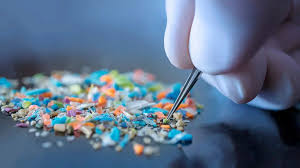
Microplastics are defined as plastic particles smaller than 5 mm.
These particles are found everywhere: in oceans, soil, drinking water, food, and even the air we breathe. Yet, the origins of these particles are often invisible to consumers.
Using data from the IUCN, CSIRO, and Elsevier, this graphic, via Visual Capitalist, by Made Visual Daily breaks down what actually makes up these particles and where they come from.
A breakdown of microplastic sources, compiled from multiple environmental studies:

The chart shows that the biggest contributor to microplastics is synthetic textiles, which account for 35% of the total. Tires (28%) and city dust (24%) are also major culprits, followed by road markings (7%) and a grab bag of other sources (6%).
How Do These Microplastics Enter the Environment?
Microplastics enter the environment in two main forms: primary and secondary.
Primary microplastics are released directly into the environment at a microscopic size. These include:
Fibers shed from washing synthetic fabrics like polyester, nylon, or acrylic.
Rubber dust worn from car and truck tires during normal use.
Fragments in city dust from the abrasion of paints, soles, furniture, and building coatings.
Plastic pellets ("nurdles") lost during plastic manufacturing or shipping.