










Breaking News
 Quantum walkie-talkie: China tests world's first GPS-free radio for border zones
 RIGHT NOW!: Why was lawyer Van Kessel, of the civil case on the merits in the Netherlands, arrested?
 PENSION FUNDS PANIC BUYING SILVER – Ratio Below 60 Triggers $50B Wave (Danger Next Week)
 Dollar set for worst year since 2017, yen still in focus
Top Tech News
 EngineAI T800: Born to Disrupt! #EngineAI #robotics #newtechnology #newproduct
 This Silicon Anode Breakthrough Could Mark A Turning Point For EV Batteries [Update]
 Travel gadget promises to dry and iron your clothes – totally hands-free
 Perfect Aircrete, Kitchen Ingredients.
 Futuristic pixel-raising display lets you feel what's onscreen
 Cutting-Edge Facility Generates Pure Water and Hydrogen Fuel from Seawater for Mere Pennies
 This tiny dev board is packed with features for ambitious makers
 Scientists Discover Gel to Regrow Tooth Enamel
 Vitamin C and Dandelion Root Killing Cancer Cells -- as Former CDC Director Calls for COVID-19...
 Galactic Brain: US firm plans space-based data centers, power grid to challenge China



Dollar set for worst year since 2017, yen still in focus
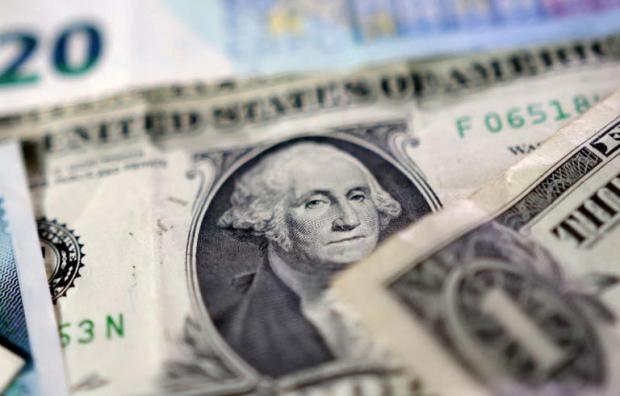
Tuesday's solid U.S. GDP reading failed to move the dial on the rate outlook, leaving investors pricing in roughly two more Fed cuts in 2026.
"We expect the FOMC to compromise on two more 25 bp cuts to 3-3.25% but see the risks as tilted lower," said Goldman Sachs Chief U.S. Economist David Mericle, citing slowing inflation as a reason for the forecast.
The euro and pound each nudged up to fresh three-month highs on Wednesday, though were last broadly steady on the day at $1.180 and $1.3522, respectively.
Against a basket of currencies, the dollar index fell to a 2-1/2-month low of 97.767. It was on track to lose 9.8% for the year, which would mark its steepest annual drop since 2017. Any further weakness in the last week of the year would take its fall to its greatest since 2003.
The dollar has had a tumultuous year, whipsawed by President Donald Trump's chaotic tariffs that sparked a crisis of confidence in U.S. assets earlier this year, while his growing influence over the Fed has also raised concerns about its independence.
In contrast, the euro is up just over 14% for the year thus far, putting it on track for its best performance since 2003.
The European Central Bank stood pat on rates last week and revised upwards some of its growth and inflation projections, in a move that likely closes the door to further easing in the near term.
Traders have since responded by pricing in a slim chance of tighter policy next year, mirroring expectations for Australia and New Zealand, where the next moves are seen as being hikes.
That has in turn lifted the two Antipodean currencies, with the Australian dollar, up 8.4% to date, scaling a three-month peak of $0.6710 on Wednesday, and the New Zealand dollar similarly touched a 2-1/2-month high of $0.58475.
Sterling has gained more than 8% for the year. Investors are betting the Bank of England will deliver at least one rate cut in the first half of 2026, and place a roughly 50% chance on a second before the year-end.
However, most currencies have lost significant ground versus precious metals such as gold, which touched a fresh record high on Wednesday. [GOL/]
Currencies of smaller European countries, often with low debt, have been among the best performers this year.
The dollar has shed 12% on the Norwegian crown, 13% on the Swiss franc -- to last trade at 0.7865 francs - and 17% on the Swedish crown, hitting its lowest since early 2022 on Wednesday at 9.167 crowns.